Date: 2026.11.10 Click: 26
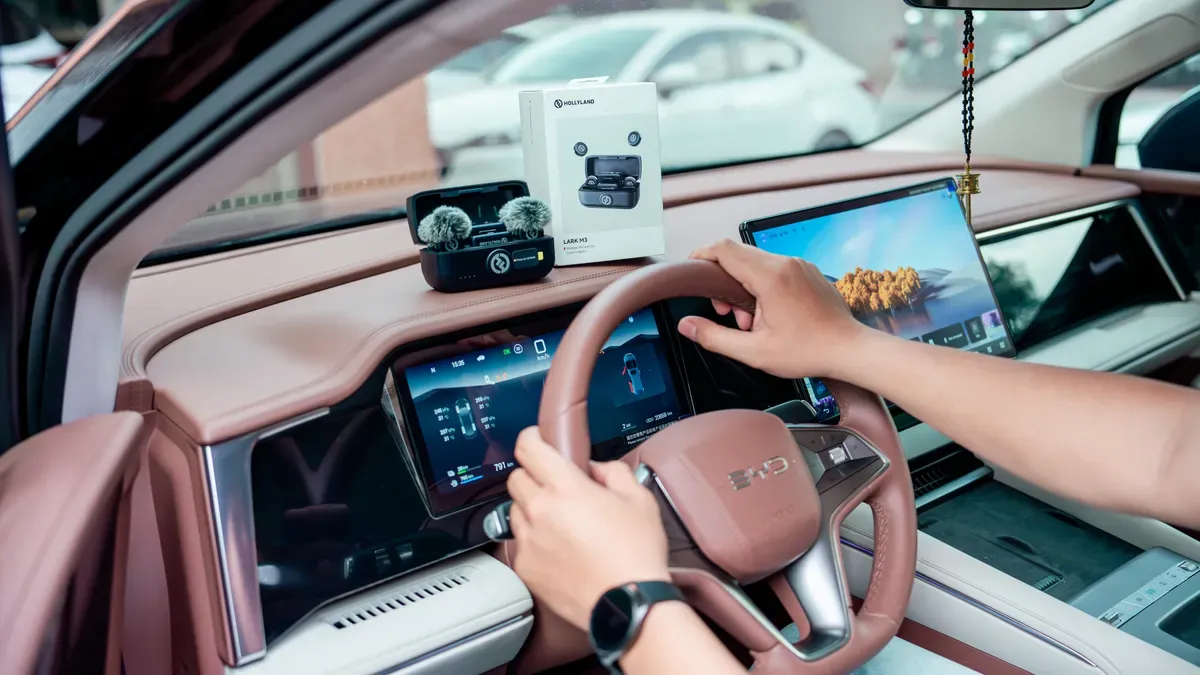
Automotive sensors work like a nervous system for your vehicle. These small sensors watch over systems and parts all the time. They detect physical or environmental conditions — temperature, pressure, motion, position — and turn them into electrical signals. A sensor usually pairs a sensitive element with a conversion element. Together they translate a non-electrical quantity into a usable electrical output, as GB 7665-2005 describes.
Your Engine Control Unit (ECU) acts as the brain. It receives these signals and analyzes them. The ECU can then adjust an engine part or take immediate action, such as automatic emergency braking, according to Wagner Brake. These sensors start working the moment you turn the ignition on.
Key TakeawaysAutomotive sensors work like a car's nervous system. They constantly check conditions and send signals to the Engine Control Unit (ECU).
The ECU is the brain. It reads sensor data and quickly adjusts engine parts. It also triggers safety actions like automatic braking.
Safety sensors find obstacles and blind spots. They help stop crashes by warning you or putting on the brakes for you.
Engine sensors keep track of air, fuel, and pressure. They help the ECU keep the engine running smoothly and efficiently.
Many kinds of sensors work together. Each sensor has its own job, and they all help with safety, performance, and comfort.
Automotive sensors are devices that detect and measure things like pressure, speed, and temperature. Each unit has a sensitive element that reacts to a change. It also has a conversion element that turns that reaction into an electrical output. For example, a pressure sensor flexes a diaphragm when air or fuel pushes against it. The flex makes a small voltage. A temperature sensor changes its internal resistance as heat rises or falls. A speed sensor makes pulses as a toothed wheel passes its tip.
The conversion process follows a simple path. A physical, chemical, or electrical change happens at the sensing element. The element turns that change into an analog voltage. Then an analog-to-digital converter turns the voltage into digital data that a microcontroller can read, as the LinkedIn post from Vanishree DV explains. This chain lets a mechanical event become a number the computer can act on.
These devices start working the moment you turn the ignition on. They watch conditions both inside and outside the vehicle. Inside, they track engine temperature, oil pressure, and throttle position. Outside, cameras, radar, LiDAR, and GPS see lanes, traffic signs, other vehicles, pedestrians, and obstacles, according to Total Phase. This constant watch gives the control system a live picture of the world.
The Engine Control Unit receives these signals and decides what to do next. Total Phase calls it a computerized component that controls and manages various systems. It does this by receiving real-time input from sensors spread throughout the vehicle. Its embedded software holds algorithms made for each system it manages. Based on the processed data, it sends output signals to actuators, which turn the commands into physical actions.
Engine Control Unit (ECU): monitors and adjusts various engine parameters, such as fuel injection, ignition timing, and emissions.
The cycle repeats nonstop, and you can break it into clear stages:
Data processing: reads inputs from sensors such as engine temperature and wheel speed, then runs pre-programmed logic to make real-time decisions.
Actuator control: sends commands to actuators such as fuel injectors and ABS pumps.
Communication: shares data with other control units via protocols like CAN, LIN, or Ethernet.
Diagnostics: watches for faults and stores codes such as OBD-II P0171, "System Too Lean."
The sequence itself follows four steps, as the TMA Solutions insight lays out:
Sensors collect real-time data from the vehicle environment.
The ECU processes this data using embedded software.
Control algorithms decide the required action.
Commands go to actuators or other ECUs.
This loop runs nonstop, so the engine, brakes, and driver-assistance features respond to changing conditions in real time. The unit also adapts. When an air filter clogs, it adjusts fuel injection to hold performance steady. That self-correction is why vehicle sensors and the computer behind them work as one system rather than separate parts.
Sensors in Vehicle Safety Systems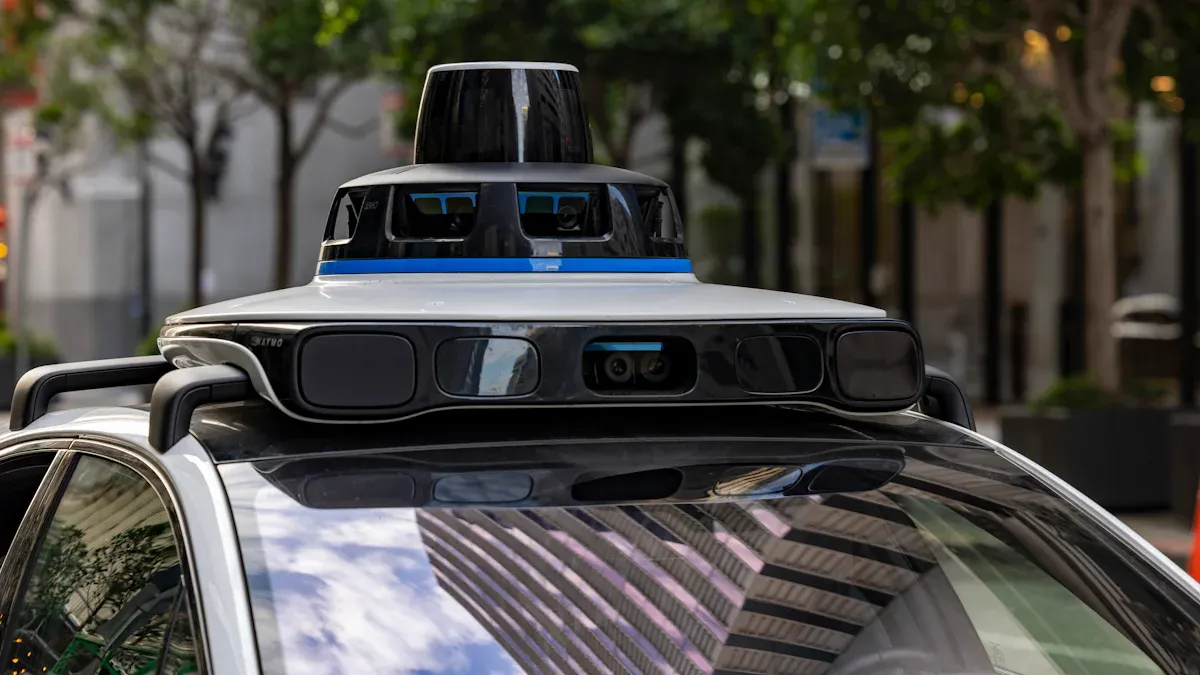
Driver-assistance features rely on sensors that watch the road around you. Front crash prevention systems use cameras, radar or lidar to detect when your vehicle gets too close to the one ahead, according to the Insurance Institute for Highway Safety. The system warns you and precharges the brakes. Most systems also apply the brakes if you do not respond. Blind spot detection systems alert you to vehicles in areas your mirrors cannot show, and they rely on radar, cameras, and ultrasonic devices.
|
System |
How it detects obstacles or blind spots |
|---|---|
|
Blind spot warning |
Alerts you with an audio or visual warning when a vehicle sits in an adjacent lane |
|
Blind spot intervention |
Uses rear-facing cameras or proximity sensors, then applies light braking or steering input to guide you back |
|
Rear automatic braking |
Uses parking sensors and the backup camera to detect objects behind you |
|
Pedestrian automatic emergency braking |
Uses forward sensors to spot a pedestrian in your path and brake automatically |
Radar sensors work well for long-range detection in bad weather. Cameras give high-resolution images but need clear visibility. Ultrasonic sensors handle short-range work at low speeds. Lidar builds 3D maps of the surroundings. Strategic Market Research expects radar to hold 41.2% of the blind spot detection market in 2024.
Stability control reads a steering angle sensor to learn where you point the wheel. It compares that input with wheel speed and yaw data. When the numbers disagree, the system brakes individual wheels to bring you back in line. An air bag sensor triggers restraint deployment on impact.
A tire pressure monitoring system keeps watch on inflation. Direct systems mount a battery-driven pressure sensor inside each wheel, and the battery lasts 5 to 10 years, according to Bridgestone. The sensor transmits readings to a central unit several times each minute. Indirect systems skip pressure hardware and compare wheel speeds through the ABS sensors instead. A soft tire rolls faster, so the computer flags the difference.
Together, these safety sensors form the base of sensors and vehicle safety. Car proximity sensors and car proximity sensors in the bumper feed parking aids, while proximity sensors throughout the cabin and body support restraint and stability logic.
Sensors for Engine Performance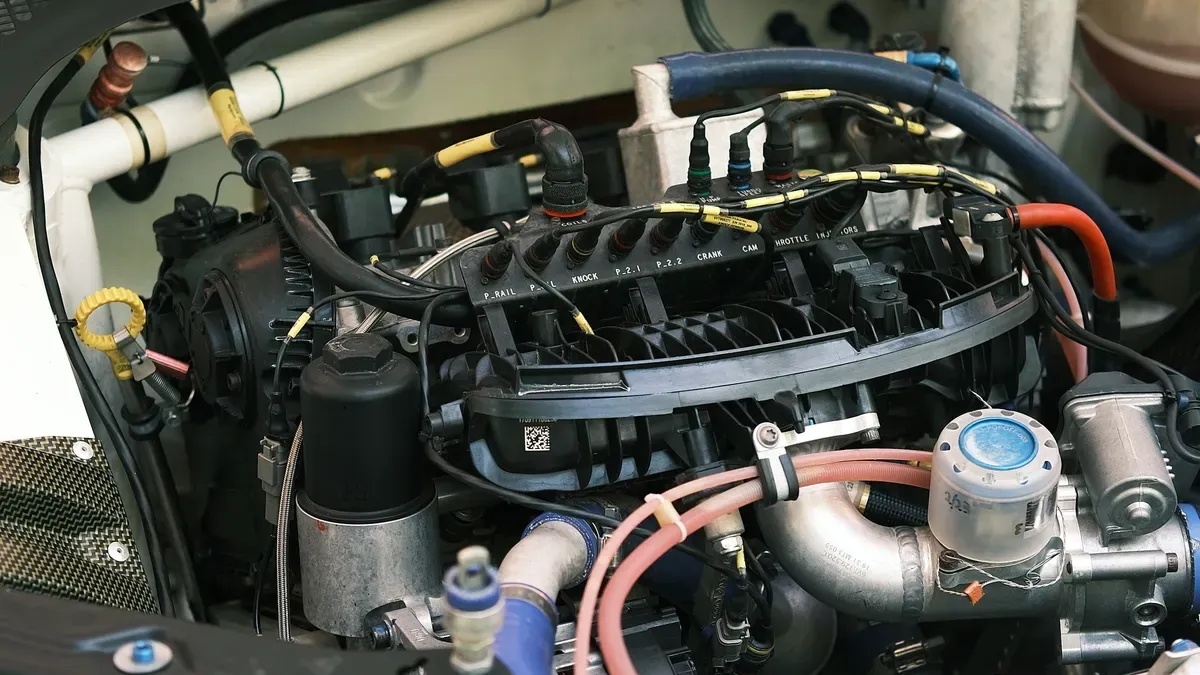
Many sensors sit inside or around the engine. Each one watches a certain measurement and sends that reading to the ECU. The computer then adjusts fuel delivery, ignition timing, and airflow to keep the engine running smoothly.
The manifold absolute pressure sensor helps the engine control module figure out fuel injection for the best air-fuel ratio. It does this by constantly checking intake manifold pressure, according to Delphi Auto Parts. The same sensor also works as a barometric pressure sensor when you turn the key, since no vacuum applies yet. That reading helps the computer judge air density. When you press the accelerator, manifold pressure goes up and the sensor's signal changes, telling the ECU to inject more fuel. The computer pairs this data with readings from the coolant temperature sensor, intake air temperature, and engine speed to work out the engine's air mass flow rate.
Pressure sensors also guard three key fluid systems, as Harcosemco describes:
Manifold pressure monitoring: measures intake air pressure to judge engine load and tune the fuel-air mixture.
Oil pressure monitoring: confirms proper lubrication and flags possible wear or failure.
Fuel pressure monitoring: keeps fuel delivery correct for efficient combustion.
On some diesel systems, an injection control pressure sensor tracks the high-pressure oil that drives the injectors, with pressures reaching 3,000 PSI or more during injection events, according to Bostech Auto. A knock sensor listens for abnormal combustion and lets the computer retard timing before damage occurs.
Exhaust sensors protect parts and keep emissions in check. An exhaust gas temperature sensor relays gas temperature to the ECU, according to Delphi Auto Parts. In gasoline engines, it shields parts from heat by prompting the computer to lower boost pressure or add fuel. In diesel engines, it helps set the right temperature for particulate filter regeneration. You will often find three or more of these sensors along one exhaust line.
Other sensors round out the emissions package. DieselNet lists NOx sensors, soot sensors, and thermal anemometer air flow sensors as common additions. Low-cost metal-oxide gas sensors can also detect combustion by-products such as carbon monoxide and hydrocarbons, and one published study in PMC reports ensemble models reaching 99.5% classification accuracy, holding above 89% even under sensor perturbations.
Common Types of Different Sensors in a VehicleYou will find many different types of sensors under the hood and around the body. Each one watches a certain measurement and reports back to the ECU. The table below covers the main engine sensors and what they do.
|
Sensor |
Description |
|---|---|
|
Mass Air Flow (MAF) |
Measures how much air enters the engine so the air-fuel ratio stays optimal. Without this data, the ECU cannot control fuel injection accurately, and the engine may idle roughly or fail to start. |
|
Manifold Absolute Pressure (MAP) |
Gives the ECU instant manifold pressure. The computer uses it to figure out air density and air mass flow rate, which sets the fuel delivery needed. |
|
Oxygen (O2) |
Measures how much oxygen is in the exhaust. |
|
Exhaust Gas Temperature (EGT) |
Has a sturdy design, fast activation times, and a wide temperature range. |
|
NOx |
Helps with advanced emission control under strict regulations. |
The mass air flow (MAF) sensor sits in the intake plumbing before the throttle body. It measures the mass of air entering the engine and sends a matching signal to the ECU, as HP Academy explains. A hot wire design heats a wire in the air stream. Flowing air cools the wire, and the current needed to keep it hot tracks the air mass. A hot film version sends out a frequency signal instead, and that frequency rises with air mass. With accurate air data, the ECU can work out exactly how much fuel to inject for any air-fuel ratio you want.
Other sensors complete the air picture. The manifold absolute pressure (map) sensor reads intake pressure, and the air intake temperature sensor reports the heat of incoming air. The throttle position sensor tracks how far the plate opens. A mass air flow (maf) sensor and a MAP sensor sometimes work together on the same engine. These automotive sensors give the ECU the data it needs to balance air and fuel.
The oxygen sensor lives in the exhaust stream. It does not measure oxygen concentration directly. Instead, it compares the oxygen in the exhaust with the oxygen in outside air, according to Wikipedia. A rich mixture creates an oxygen demand and pushes the voltage up. A lean mixture leaves oxygen excess and keeps voltage low. A zirconia sensor outputs about 0.2 V for lean and 0.8 V for rich, with an ideal setpoint near 0.45 V. The ECU uses this feedback to hold the mixture close to stoichiometric.
Oxygen sensors make closed-loop fuel injection possible. The ECU adjusts injector output in real time instead of relying on a fixed fuel map. This cuts both unburnt fuel and oxides of nitrogen. A NOx sensor adds another layer. It measures nitrogen oxide content and helps the engine management system set the exhaust gas recirculation rate and urea injection quantity, Hella notes. Its heater keeps the probe near 300 degrees for accurate readings.
Position and speed sensors form a separate family. A crankshaft position sensor and camshaft position sensor set ignition timing and injector synchronization. A wheel speed sensor feeds the anti-lock braking system, and wheel speed sensors also support traction control. A steering angle sensor tells stability control where you point the wheel. Ultrasonic sensors and car proximity sensors handle parking aids, while proximity sensors in the bumper watch for obstacles. These sensors in a vehicle round out the list of different sensors in a vehicle.
Automotive sensors link mechanical systems to digital control. They collect data from inside and outside the vehicle. That data drives control, adaptation, and response, as ProtoExpress explains. This link improves safety, comfort, and efficiency across the vehicle.
These small devices watch for changes without pause. They send each reading to the ECU. The ECU analyzes the data and commands the right action. You never see this exchange, yet it keeps your engine, brakes, and driver aids working together.
Think about every feature you rely on each day. Sensors make that technology possible, one quiet signal at a time.
FAQThey start working as soon as you turn the ignition on. From then on, they check conditions inside and outside the vehicle and send readings to the ECU. This steady flow of data lets the computer adjust engine parts or start safety actions right away.
The ECU reads each signal, runs its built-in software, and decides what to do. Then it sends commands to actuators like fuel injectors or ABS pumps. This loop repeats nonstop, so the engine and brakes respond to changing conditions in real time.
The ECU often saves a diagnostic code, such as OBD-II P0171, and may switch to a backup strategy. Performance or emissions can drop until you fix the problem. Regular diagnostics help you catch problems early.
No. Each type is built for its job. Radar handles long-range detection in bad weather, cameras give high-resolution images, and ultrasonic units cover short range at low speeds. Engine sensors, by contrast, measure pressure, temperature, and airflow.
Yes, sometimes. A manifold absolute pressure sensor also acts as a barometric pressure sensor at key-on, when no vacuum applies. That dual reading helps the computer judge air density before you press the accelerator.
Please leave your requirements and contact information, and we will send you the quotation information as soon as possible.