Date: 2026.09.22 Click: 21
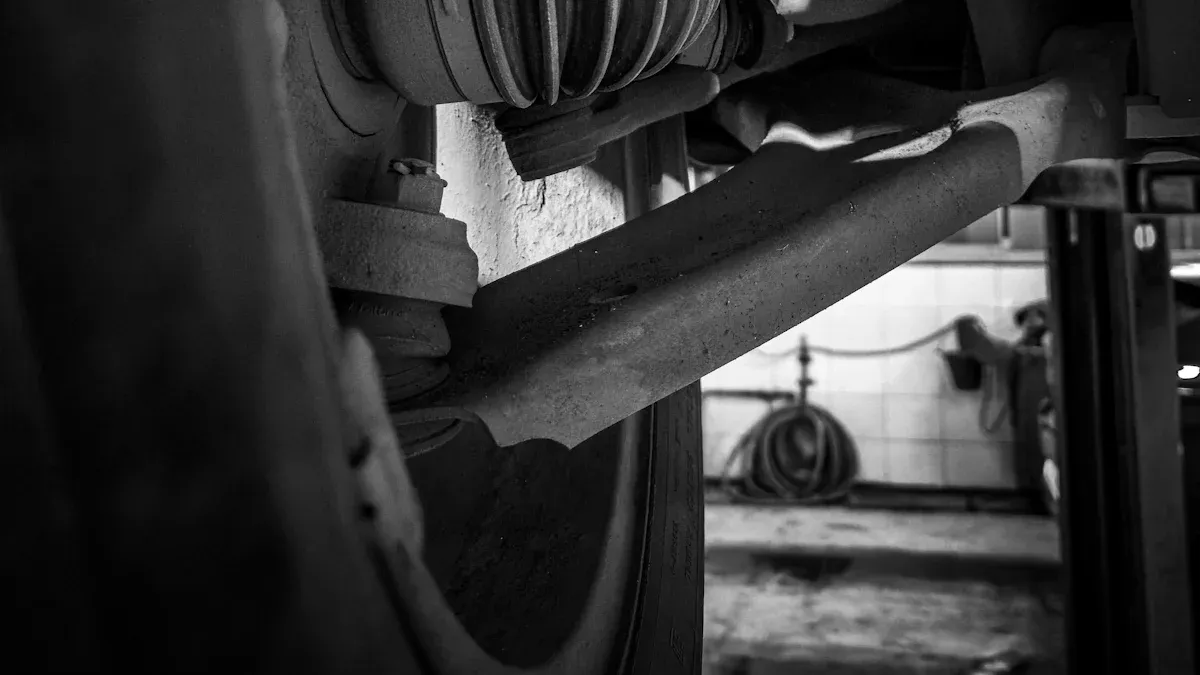
A lower control arm is a suspension component that connects your vehicle’s frame or subframe to the lower ball joint, allowing the wheel to move up and down. Think of it as a pivot point: it lets the wheel rise and fall while keeping everything aligned. Almost every vehicle has a lower control arm on each side. This part supports a lot of weight and handles bumps, so it’s built tough. Understanding what lower control arms and ball joints are can help you spot problems early. When your control arm wears out, you might feel vibrations or hear clunking. That’s because the suspension relies on it for stability and safe handling. Ignoring it can lead to uneven tire wear or worse. So knowing about lower control arms and ball joints matters for your car’s health.
Key TakeawaysThe lower control arm links the frame to the wheel. It allows vertical movement while keeping the wheel aligned.
This part supports the vehicle's weight and absorbs road shocks. It works with the ball joint for stable steering.
Signs of a worn control arm include clunking noises, wandering steering, and uneven tire wear. Address these early.
Regular inspections and alignment checks help extend control arm life. Replace bushings and ball joints around 90,000 miles.
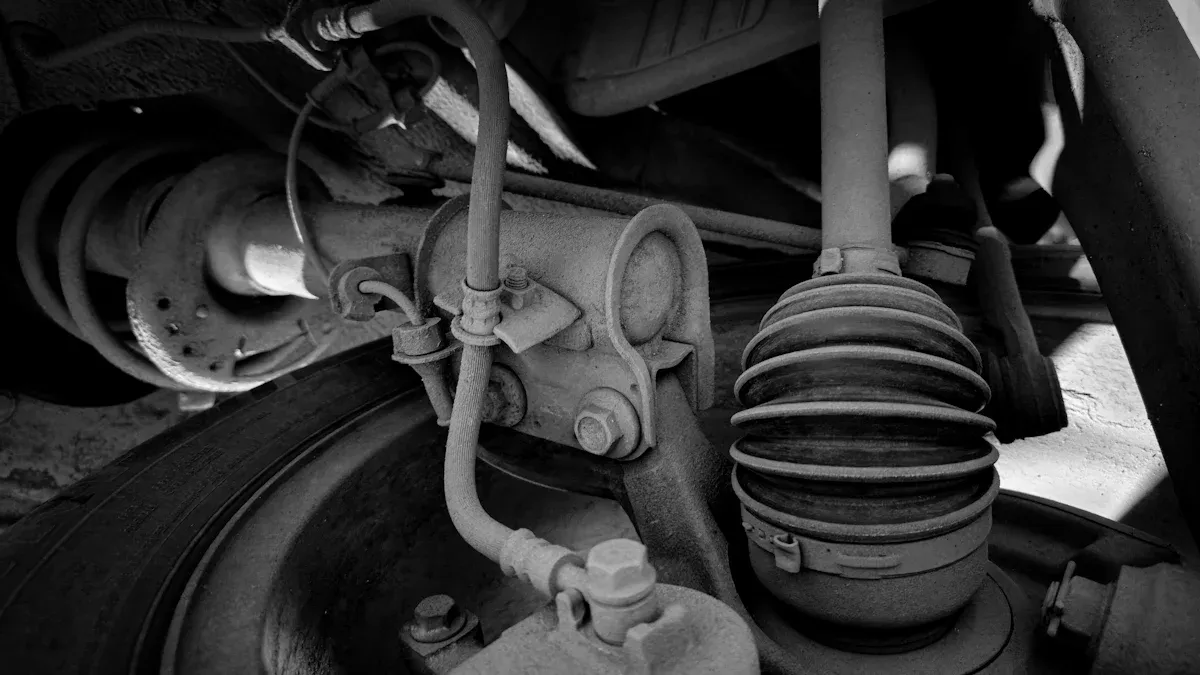
The lower control arm is the hardest-working part of your suspension. On most vehicles, it is bigger and stronger than the upper arm. This part connects your vehicle's frame or subframe to the lower ball joint. Almost every vehicle has a lower control arm on each side.
When you look at the anatomy of a suspension control arm, you will often see an A-shape or L-shape. The arm body is the main structure. Control arm bushings sit where the arm attaches to the frame. They let the arm pivot smoothly. At the wheel end, a ball joint links the arm to the steering knuckle.
Why is this part built so tough? It has to hold up the weight of the vehicle. It also takes in most of the suspension load. That is why engineers make it stronger than the upper arm. In a double-wishbone setup, the lower arm carries most of the up-and-down wheel load. It also sets the anti-dive angle. The upper arm mostly handles sideways cornering loads and controls camber gain.
The material you choose affects how long it lasts. Here is a quick look at common options:
|
Material |
Mechanical Properties |
Effect on Durability |
|---|---|---|
|
Steel |
High strength, excellent fatigue resistance, cost-effective |
Extends service life under demanding conditions; heavier weight can reduce vehicle efficiency |
|
Aluminum |
Good strength-to-weight ratio, corrosion resistance, lower fatigue limits |
Enhances resilience and reduces vehicle mass; may require design compensation for fatigue |
|
Composites (e.g., carbon-fiber-reinforced polymers) |
High strength-to-weight ratio, exceptional fatigue resistance, corrosion protection |
Contributes to longer longevity; higher initial cost and complex manufacturing |
Material metallurgy strongly affects how well a control arm holds up under load. It decides the microstructure, strength, and resistance to deformation.
In a MacPherson strut suspension, the lower control arm (often called a wishbone) links the steering knuckle to the vehicle's subframe. The arm pivots on bushings at the points where it mounts to the subframe. It connects to the knuckle through a ball joint. This setup keeps the wheel in place both side to side and front to back. The upper part of the hub carrier stays fixed to the strut.
Here is how the connections break down:
|
Component |
Type |
From |
To |
|---|---|---|---|
|
Lower Ball Joint |
Spherical |
Knuckle |
Lower Control Arm |
|
LCA Front Bush |
Bushing |
Lower Control Arm |
Subframe, Vehicle Body or Ground |
|
LCA Rear Bush |
Bushing |
Lower Control Arm |
Subframe, Vehicle Body or Ground |
Bushings do a big job here. They soften the suspension and cut down vibration. They also soak up shocks between the frame and the arm. This keeps your alignment steady and your ride comfortable. Rubber bushings usually do not need lubrication. Polyurethane bushings need grease now and then to stop squeaking.
When you study suspension control arm basics, you learn that lower control arms and ball joints work as a team. The arm pivots. The ball joint allows rotation. Together they keep your wheel planted. This is the heart of any good suspension system.
Functions of Lower Control Arms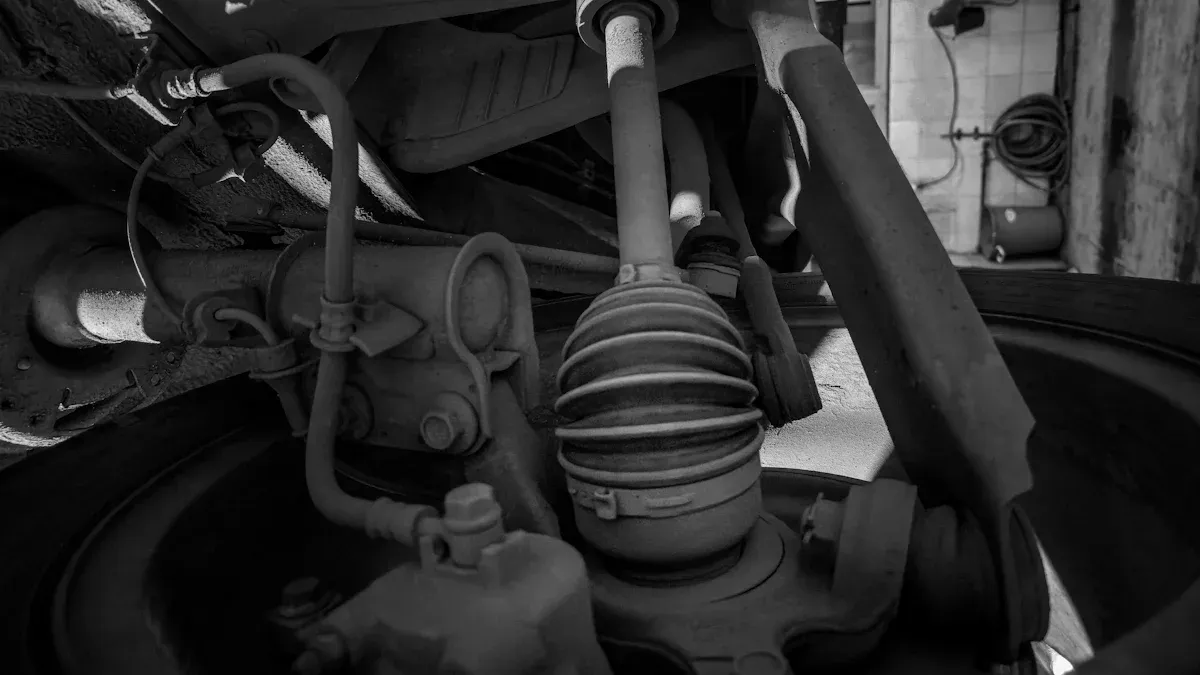
Your lower control arm does more than hold parts together. It carries the weight of your vehicle and soaks up the road. That is why it must support vehicle weight while still letting the wheel travel up and down.
When you hit a bump, the coil spring compresses. The lower control arm pivots upward along with the wheel. The shock absorber then damps the bouncing motion. Over a pothole, the process reverses. The components extend downward to keep your tire on the road.
|
Component |
Function in dampening road impacts |
|---|---|
|
Control arm |
Connects the wheel assembly to the vehicle frame, keeping alignment while letting the wheel move up and down over bumps. |
|
Shock absorber |
Uses a piston moving through hydraulic fluid or gas to dampen the up-and-down motion produced by the springs, so the car settles quickly instead of bouncing. |
The arm itself is a metal link joining the chassis to the steering knuckle. It restricts forward and backward motion while still permitting the spring to compress and extend vertically. This is what allows the coil spring and shock absorber to work together.
Bushings play a big role here too. They act as a buffer between the control arm and the frame. They absorb shocks and vibrations so your ride stays smooth. When rubber bushings wear down or crack, they can no longer absorb those shocks. Your car may feel unstable or wobbly, especially at high speeds or during quick turns.
A key job of the suspension control arm is controlling the movement of the wheels. It keeps your wheel properly aligned with the chassis as it moves up and down. This helps maintain wheel alignment and preserves the correct camber angle during suspension travel.
The control arm bushing does not directly set camber, caster, or toe. Instead, it keeps the arm stable so those angles do not change too much while you drive. Under braking, cornering, acceleration, and bumps, your wheel receives forces from many directions. A healthy bushing permits controlled flex while preventing excessive arm movement.
When a control arm bushing or ball joint fails, the entire network breaks down. A loose control arm lets the tire tilt out of position. This angle shift strains the tie rod ends and accelerates sway bar link wear. A bad control arm also causes unpredictable shifts in chassis alignment.
The functions of ball joints matter here as well. Ball joints connect the control arms to the steering system. They enable steering by letting the knuckle pivot as you turn the wheel. Together with the upper arm, the lower arm provides stability, control, and flexibility.
Worn bushings change all of this. A worn bushing allows excessive arm movement during braking, acceleration, bumps, and cornering. Your vehicle may feel loose, floaty, or unstable. You might notice delayed steering response, wandering, or pulling. Noise and vibration may increase too, including clunking, knocking, squeaking, and popping. If the arm shifts while driving, the wheel angle can change. That causes uneven tire wear such as inner, outer, feathered, or uneven tread wear.
To protect these parts, follow your owner's manual baseline. Get an alignment check at least once a year or every 12,000 miles. Also get one after hitting a curb or pothole, or following suspension or tire replacement. Skipping regular four-wheel alignment lets small angle deviations compound. Misalignment stresses control arms along with wheel bearings and tie rods.
Common Issues and MaintenanceYour lower control arm takes a beating every mile. After about 90,000 to 100,000 miles, parts start to wear. The bushings go first. These rubber-and-metal sleeves crack or tear. You might hear a clunk over bumps. The steering may wander too. Your tires can wear unevenly.
The ball joint is another weak point. It carries real weight and lets you steer. When the ball joint wears out, you feel play in the wheel. A clunk on turns tells you something is wrong. If the ball joint separates, the wheel can drop. You lose control. That is a safety-critical failure. These are the most common reasons for their failure.
Worn lower control arms and ball joints cause unstable handling. Your vehicle may wander on the road. Emergency braking or sudden lane changes become risky. The car feels sloppy and slow to respond. At highway speeds, this raises accident risk.
So how do you check a suspension control arm? You can test for vertical play. Your mechanic can test for vertical play using a dial indicator. If the measured play exceeds the manufacturer's specification, replacement is needed.
Even a small amount of play can affect handling, so it's important to use the manufacturer's specifications as a guide.
Ball joints carry real load and allow steering. When worn, they produce play, a clunk on turns, and can separate, causing wheel drop and loss of control. A suspension control arm uses the ball joint to connect to the steering knuckle. This joint allows rotation while supporting weight. When the ball joint fails, your whole suspension changes. The car feels loose. Understanding ball joints helps you catch problems early.
Regular inspection matters for your suspension. Check both bushings and ball joints for play. Replace the entire control arm when you find damage. Or replace just the bushing or ball joint if possible. Keep your suspension in good shape for safety. Knowing the common reasons for their failure helps you stay ahead of repairs. Lower control arms and ball joints work together. Both need attention.
Your lower control arm is an integral part of a vehicle’s suspension system. It delivers stability, control, and smoothness every time you drive. This control arm supports much of your car's weight and works closely with the ball joint. That partnership keeps your tires wearing evenly and your steering responsive.
But this part wears out over time. After many miles, bushings and ball joints degrade. If you hear clunking, feel wandering, or spot uneven tire wear, see a mechanic right away. Catching issues early prevents costlier damage down the road. Your safety depends on spotting these signs in time.
FAQMost lower control arm bushings start to wear between 90,000 and 100,000 miles, at which point the arm may need replacement. Your driving habits and road conditions affect the lifespan too. Rough roads and potholes speed up the wear. Regular inspections help you catch problems before they get worse.
You can drive short distances, but it is risky. A worn control arm causes wandering and poor handling. If the ball joint separates, your wheel can drop. That means you lose control. Get it fixed right away for your safety.
You will hear clunking or knocking over bumps. Creaking and popping sounds are common too. These noises come from worn bushings or a bad ball joint. If you notice these sounds, have a mechanic check your suspension soon.
It depends on the condition of each side. A mechanic can inspect both and advise on whether one or both should be replaced.
Look for uneven tire wear, vibrations in the steering wheel, and pulling to one side. A suspension control arm with play will feel loose. Your mechanic can measure the movement. Any play beyond the manufacturer's spec means you need a new suspension control arm.
Please leave your requirements and contact information, and we will send you the quotation information as soon as possible.