Date: 2026.09.21 Click: 26
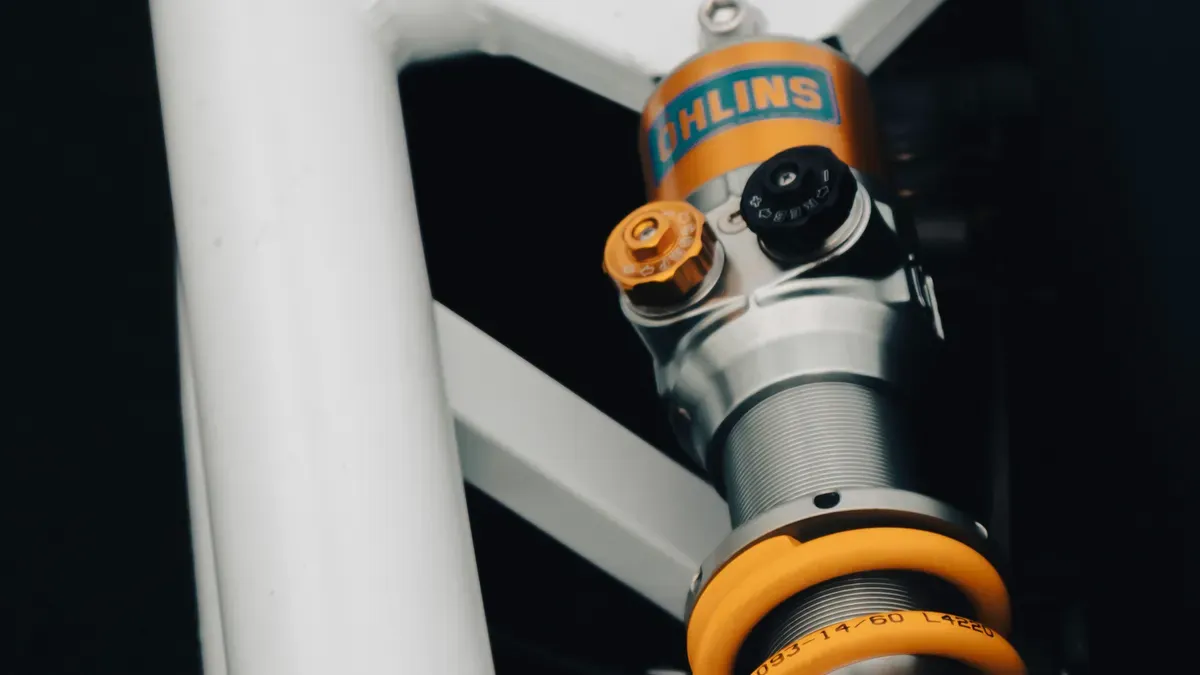
A strut mount is the rubber-and-metal cushion that connects the top of a MacPherson strut to your vehicle's body. It sits at the top of the strut assembly. This part does two critical jobs. First, it holds the strut securely in place. Second, it blocks noise, vibration, and harshness from reaching your cabin. You may wonder what is a strut mount's role in your suspension. Think of it as a bridge between the road and your car's frame. This article explains how it works, why it fails, the symptoms you notice, and how to decide on replacement.
Key TakeawaysA strut mount links the suspension strut to the car body. It lowers noise and lets the steering rotate.
A bad strut mount causes clunking noises, steering shaking, and uneven tire wear. Check these signs early.
Replace strut mounts as a pair. Always get a wheel alignment after installation to protect tires and handling.
Driving with a bad strut mount is not safe. It can make your car take longer to stop and cause you to lose control of your vehicle.
A strut mount is the part that connects the suspension strut to your vehicle's body. It is a rubber-and-metal piece bolted to the top of a MacPherson strut. You will find this part on vehicles that use MacPherson-type struts. The mount also has other names. People call it the upper mount or the top rubber at the top of the strut. If you ask what is a car strut mount, the simplest answer is this: it is the part that holds the top of the strut in place while cushioning the ride.
You can often see the upper portion of front strut mounts yourself. Open the hood and look at the top of the suspension towers on both sides of the engine compartment. The mount sits right there, bolted to the wheel house tower. A strut mount is a structural, load-bearing component. It connects the strut assembly to the vehicle chassis and often serves as a steering pivot. This sets it apart from a shock mount. A shock mount simply connects a non-structural shock absorber to the chassis to dampen vibrations. A strut mount does much more. It carries weight, supports steering rotation, and isolates noise.
A typical strut mount assembly contains several key parts. The rubber insulator is the most important one. It absorbs road noise and vibration. Shock absorber mount insulators are critical rubber or elastomer components that isolate the vehicle's suspension from the frame and chassis. The metal plate gives the mount its structural strength. The strut bearing sits inside the assembly. This bearing serves as a pivot point between the vehicle's body and the suspension strut. It supports the weight of the vehicle while allowing the strut assembly to rotate freely when you steer. It also handles the rotation of the coil spring to prevent binding and twisting against the frame.
Manufacturers choose different materials for the rubber insulator. Natural rubber and polyurethane are the two common options. Each material behaves differently.
|
Material |
Key Characteristics |
Suitability |
|---|---|---|
|
Natural Rubber (NR) |
Compliant and flexible; superior NVH isolation; absorbs microscopic spring movements; grips steel spring well to prevent rotation and clicking; resists compression set after 100,000 cycles |
Preferred for daily driving and passenger comfort |
|
Polyurethane (PU) |
Very durable and oil-resistant; stiffer; low coefficient of friction; low hysteresis transmits more vibration than it absorbs |
Used in racing for stiffness; not ideal for passenger vehicles |
A spring insulator is a molded ring made of rubber or polyurethane that fits between the coil spring and the spring perch. Complete strut mount kits usually include the mount, the strut bearing, and installation hardware. Monroe Mounting Kits use high-quality bearings optimized for lubrication, premium rubber selected for hardness balance, and steel components. When you replace a strut mount, check whether the kit includes all these pieces. A missing strut bearing will cause steering problems later.
How Strut Mounts Work With the Suspension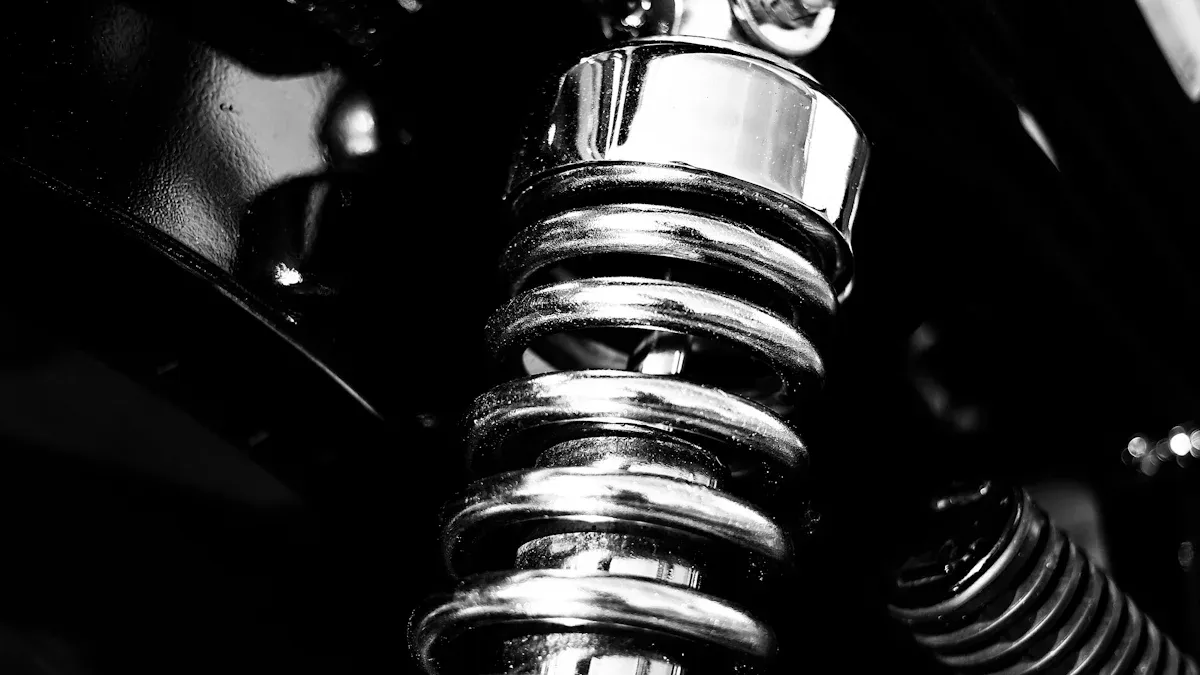
The strut mount holds the full weight of your car at each corner. It bolts to the body and keeps the top of the strut assembly in place. This makes it a load-bearing part, not just a cushion. The strut itself holds the spring and damper. The mount links that strut to the chassis. Together, they form a strong link that keeps your suspension geometry steady.
When you drive over a bump, the strut squeezes and bounces back. The mount lets this motion happen while keeping the strut lined up. A strong metal plate inside the mount takes the up-and-down loads. The rubber insulator handles smaller movements. This teamwork keeps your tires on the ground and your suspension parts working the way they should.
The mount works with the strut to block road vibrations. Rubber soaks up the high-frequency buzz from rough pavement. This vibration damping keeps your cabin quiet and your steering wheel steady. Without it, every crack in the road would go straight to your hands.
The strut bearing inside the mount lets the strut turn as you steer. This bearing is the pivot point for your steering system. A healthy bearing turns freely. A worn one sticks and creates resistance. The table below shows how a bad strut mount affects your steering.
|
Symptom |
Mechanism |
Effect on Steering Feedback and Precision |
|---|---|---|
|
Steering binding (memory steer) |
Strut mount bearing seizes from contaminant ingress or lack of lubrication |
Steering feels heavy or notchy; car continues pulling in the turned direction after release; prevents self-centering |
|
Vibration |
Rubber loses damping coefficient, so high-frequency road vibrations are no longer absorbed |
Vibrations travel up the steering column, causing steering wheel shake at highway speeds |
|
Clunking or crunching |
Worn mount allows excessive movement and bearing seizure |
Noise over bumps and when turning; cabin vibration; memory steer indicates bearing seizure |
A failing strut mount hurts your steering precision. It can make your stopping distance longer by changing suspension loading during braking. It may also cause loss of vehicle control during emergency maneuvers. These risks make early diagnosis important for your suspension and steering systems.
You may notice several warning signs:
Steering wheel vibration or shimmy: a compromised strut mount cannot isolate suspension movement from the steering column, so vibrations reach your hands, especially when turning at low speeds or on rough pavement.
Reduced steering response and centering: a worn strut mount makes steering feel less direct or slower to respond, with possible play, sponginess, or hesitation.
Degraded steering precision: a failing strut mount increases stopping distance and can lead to loss of control during panic braking.
A binding mount also makes steering harder on the affected side. You can measure this side-to-side difference during a diagnostic inspection. A deformed or cracked insulator lets the strut top shift. This changes camber and caster angles, causing uneven tire wear, usually inner-edge wear on front tires. The steering system needs a stable mount to keep alignment true. When the rubber insulator permanently deforms, the strut may not rotate freely. This causes steering wheel vibration, uneven return-to-center behavior, and alignment drift. Regular inspection of your strut mounts protects your steering system and keeps your ride safe.
Causes and Symptoms of a Bad Strut MountSeveral things wear out a strut mount over time. Potholes and rough roads cause 60-70% of early wear. A sudden hit from a pothole sends thousands of pounds of force through the strut. Hard driving makes wear 40-50% higher than smooth driving. Hitting a pothole at 50 mph gives four times the force of hitting one at 25 mph. Not keeping up with maintenance makes it worse. Delayed maintenance leads to more failures, and misalignment pushes parts out of their proper angles.
The weather also matters. Heat, humidity, and road salt make rubber break down faster and cause rust. These things shorten the life of any strut mount. A normal strut mount lasts 50,000 to 100,000 miles. Bad conditions can make it last much less.
"Suspension parts wear out early because of bad roads, how you drive, poor maintenance, and weather that speeds up damage."
Big hits and crashes can tear or split the bushing early. Getting older and constant stress weakens the rubber. Road salt, water, and strong chemicals make it break down faster. Very hot and cold cycles cause cracking. All these things work together to damage the strut mount.
You will see several signs of a bad strut mount. The most common is clunking or popping noises over bumps. You might also hear creaking or grinding when turning slowly. A stuck strut bearing makes that noise. Steering wheel shake at highway speed is another sign. Tires wearing unevenly, with cupping or feathering, shows a problem. Bad handling and stability make your car feel loose. You may notice body roll, drifting, or too much bouncing.
A broken strut mount lets the strut move too much. That changes your alignment and causes uneven tire wear. A strut bearing has stuck or worn out when you feel resistance while turning. Visible cracks or rust on the rubber mean the mount is failing. These signs of a bad strut mount often look like worn struts. How do you tell them apart? Worn struts cause continued bouncing after bumps. A failing strut mount causes clunking over bumps and steering noise. A broken strut mount also makes noise when you turn the wheel. Check the strut mount bearing for looseness. If the bearing sticks, the strut mount is the problem. These signs help you find the issue before it damages other parts.
Replacing a Failing Strut Mount Safely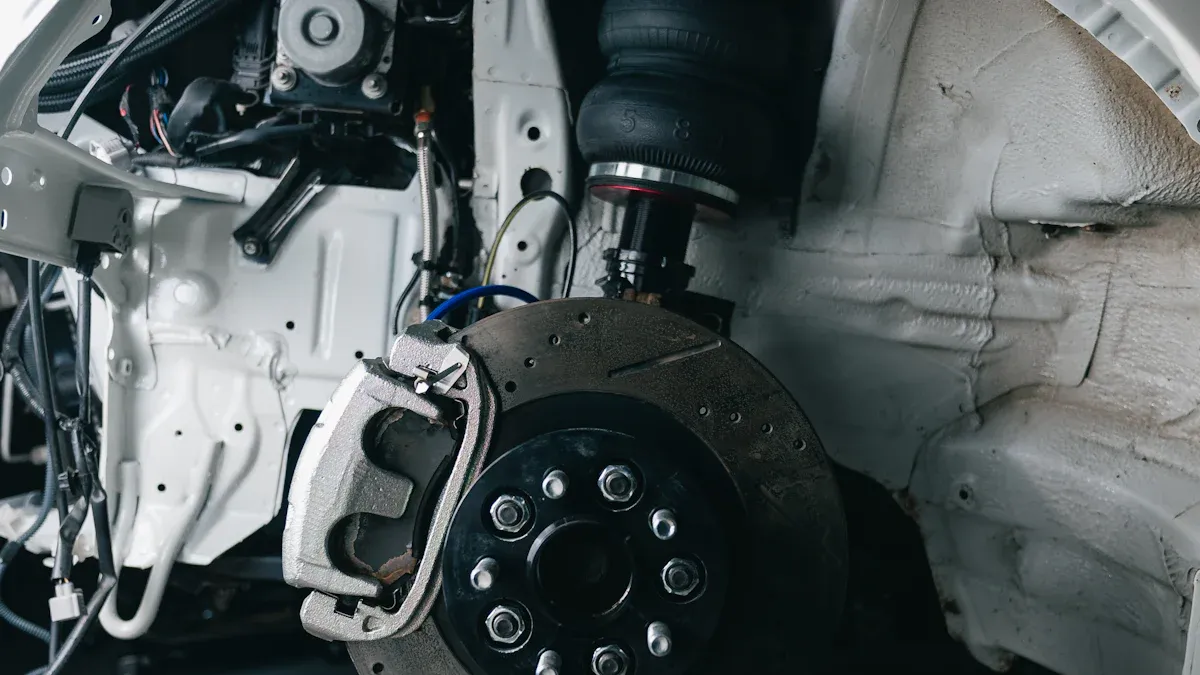
A shop will charge about $200 to $400 per strut to replace a strut mount. The final price depends on your car and local labor rates. Vista Motion's strut mount explainer cites public references showing about $150 to $350 per side for parts and labor. PartCatalog's guide says a complete replacement on one side costs $300 to $800 total. Small cars and sedans cost less to fix than SUVs and trucks. If you search for strut mount replacement cost uk numbers, you will see similar ranges after you convert currency. The cost to replace one strut mount covers the part, the labor, and sometimes an alignment.
Parts by themselves are cheaper. You can buy a strut mount for $30 to $60, or a shop will charge $50 to $90 for the part. Quality levels matter too.
|
Quality Tier |
Strut Mount (Single) Price Range |
|---|---|
|
Budget |
$40–$80 |
|
Mid-Range |
$80–$130 |
|
Premium |
$130–$200 |
Good aftermarket options can save 20–40% on parts compared to OEM. Always replace strut mounts in pairs. When one mount fails from mileage and fatigue, the other mount is close to the end of its life. Replacing both at once saves you from paying the labor setup cost twice.
Even if only one side has failed, both sides are replaced for balance as standard practice.
Driving on a broken strut mount is very unsafe and should not be done. The dangers of driving with a broken strut mount include longer stopping distances, poor directional control, and too much body dive during braking. A worn mount lets the strut assembly break free from the chassis in extreme cases. You also face loss of control over the vehicle during emergency maneuvers. Cornering suffers with too much lean and unpredictable handling. Highway stability drops, especially in crosswinds.
A bad strut mount can also damage other suspension parts. Fix the problem early to replace a strut mount safely. A professional inspection confirms the diagnosis before you spend money. After replacing a strut mount, get a wheel alignment. New struts change camber, toe, and caster angles. Monroe recommends an alignment whenever you replace struts or steering and suspension components.
|
Alignment Angle |
How It Is Affected |
Consequence If Not Reset |
|---|---|---|
|
Camber |
Vertical tilt of tires changes |
Uneven tire wear |
|
Toe |
Tires turn in or out when viewed from above |
Rapid tire wear |
|
Caster |
Forward/backward angle of steering axis |
Difficulty driving straight |
Without an alignment, you risk premature tire wear and poor handling. A qualified mechanic should inspect the whole strut assembly and confirm the repair.
The strut mount is a small but important link between the strut and your vehicle body. It holds weight, blocks vibration, and helps with steering. Finding problems early stops more suspension damage and keeps your ride comfortable and safe. A broken strut mount is behind about 10% of all suspension repairs, so do not ignore the signs.
Have a qualified mechanic check any strut mount problem you suspect. Compare replacement against the shape of your struts. If your struts are worn, replace both at the same time. Look beyond the strut mount when you take care of your suspension system. Regular checks of the whole assembly keep your vehicle safe and smooth for years to come.
FAQMost last 50,000 to 100,000 miles. Rough roads and potholes shorten that life. Inspect the mount when you service the strut assembly.
No. A bad strut mount is unsafe. It can increase stopping distance and cause loss of control. A worn mount may let the strut break free from the chassis.
Yes. A new strut mount changes camber, toe, and caster angles. An alignment protects your tires and handling. Monroe recommends an alignment whenever you replace struts or steering and suspension components.
Yes, if your struts are worn. The labor overlaps, so you save money. Replace both mounts at once for balance. A shop charges about $200 to $400 per side.
Worn struts cause continued bouncing after bumps. A bad mount causes clunking over bumps and noise when you turn. Check the strut bearing for looseness. A stuck strut bearing points to the mount.
Please leave your requirements and contact information, and we will send you the quotation information as soon as possible.