Date: 2026.09.20 Click: 38
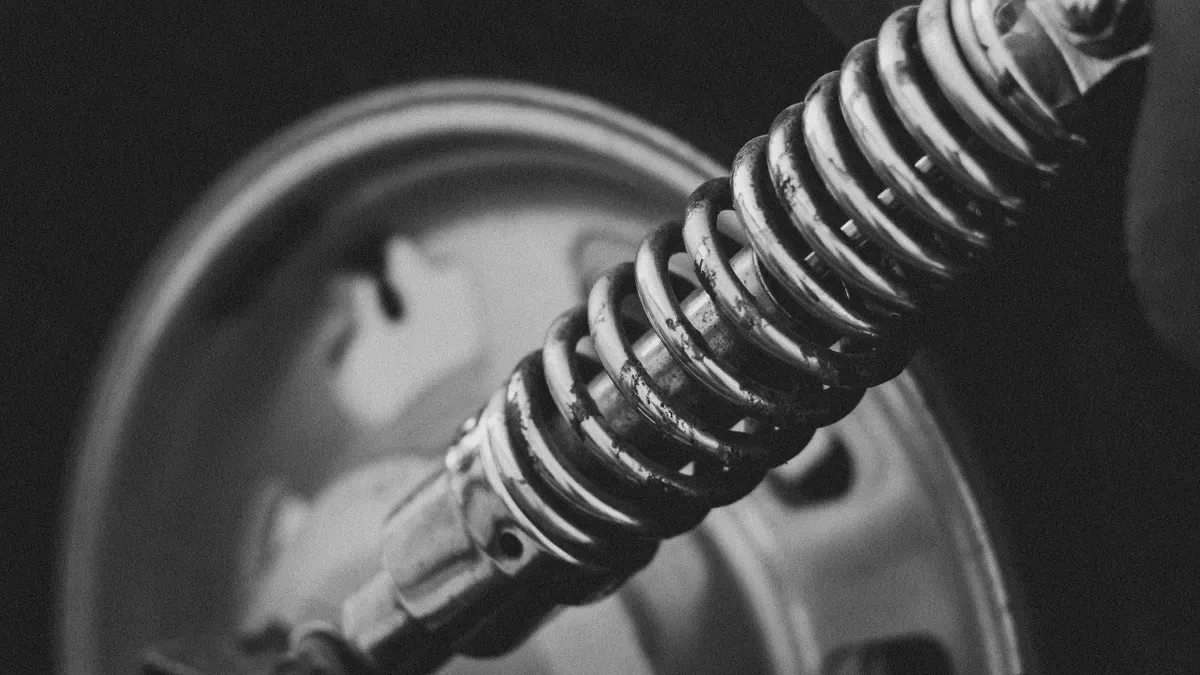
A suspension spring is a mechanical part that absorbs energy by compressing or expanding. It does two main jobs for your vehicle. First, it holds the car at the right height above the wheels. Second, it cushions you from every bump and pothole in the road.
Think of a mattress. You sink into it, and it pushes back. A spring works the same way under your car. The metal coil squishes down when you hit a bump, then bounces back to its normal shape. This simple action keeps your drive smooth and your tires planted on the ground. Without it, every crack in the pavement would shake the whole cabin.
Key TakeawaysSuspension springs hold up your vehicle and soak up bumps from the road.
Spring rate determines how stiff your ride feels and affects comfort and handling.
Springs and shock absorbers work as a team to keep your ride smooth and safe.
Worn springs can cause sagging, bouncing, and poor handling, so check them regularly.
Different types of springs, like coil, leaf, and air springs, serve different vehicles and needs.
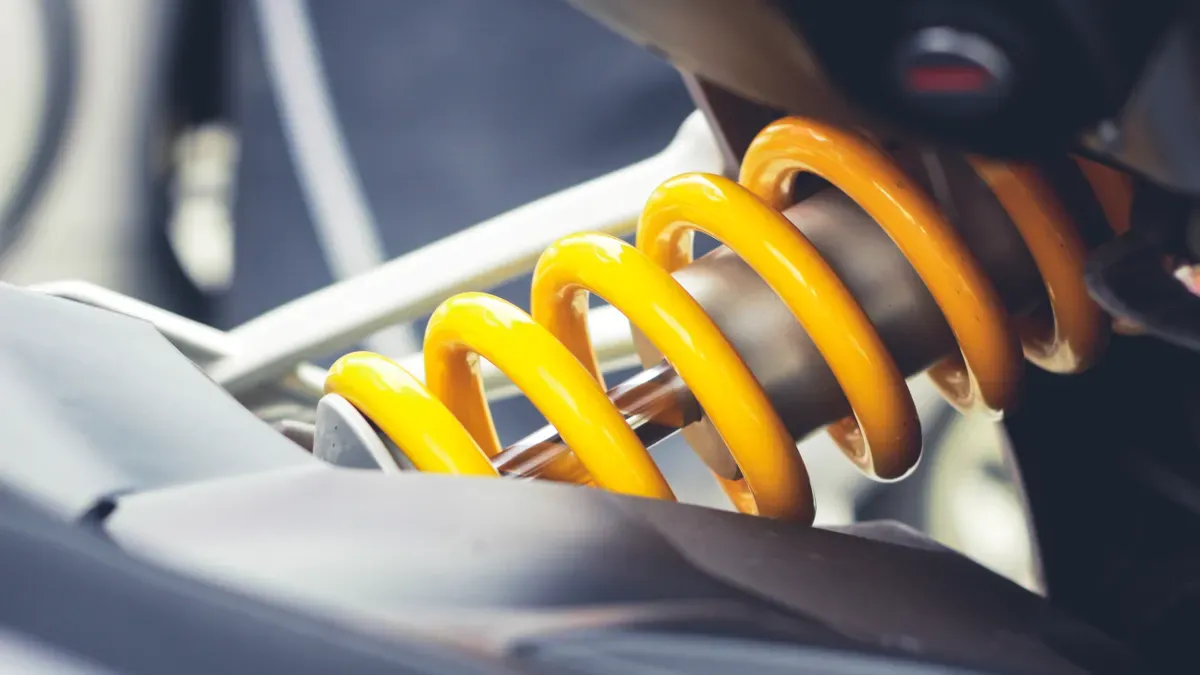
A suspension spring is a mechanical component, typically a tightly wound helical coil of metal, that absorbs energy by compressing or expanding. It acts as the foundation of your vehicle's suspension system. This part maintains proper ride height while cushioning the vehicle from bumps and road irregularities. You can think of it as the backbone of your automotive suspension. Without it, your car would collapse onto its wheels and every road imperfection would rattle your teeth.
Your suspension spring carries the entire weight of your vehicle. Every time you sit in the driver's seat, load groceries into the trunk, or tow a trailer, the spring compresses to handle that extra load. The coil spring pushes back against the weight and keeps your car sitting at the correct height above the road. This job never stops. Whether you park on a flat driveway or drive over a mountain pass, the spring holds steady.
Picture a pogo stick. When you step onto it, the spring inside compresses under your weight. It pushes back with enough force to lift you. A coil spring under your car works the same way. The metal coils squeeze together when weight presses down. They spring back to their original shape when the weight lifts. This constant push and pull keeps your vehicle level and stable.
The spring's strength determines how much weight your car can carry. A stiffer coil spring supports heavier loads without sagging. A softer spring gives you a more comfortable ride. Engineers match the spring to the vehicle's weight and purpose. A small sedan needs different springs than a heavy pickup truck. This balance keeps your tires in contact with the road and your chassis at the right height.
Roads are never perfectly smooth. You hit potholes, speed bumps, cracks, and uneven pavement every day. Your suspension spring absorbs these impacts before they reach your body. When your tire rolls over a bump, the spring compresses instantly. It stores that energy for a moment. Then it expands back to its normal length. This cycle of compression and expansion is the heart of shock absorption.
The spring does not work alone. Shock absorbers control the spring's movement and prevent it from bouncing endlessly. Together, they form a team that keeps your ride smooth. The spring handles the big impacts. The shock absorbers fine-tune the motion. Without shock absorbers, your car would bounce down the road like a basketball.
Different road conditions test your springs in different ways. A sharp pothole compresses the spring quickly. A gentle dip in the road compresses it slowly. The spring responds to both without losing its shape. This flexibility protects your chassis, your passengers, and your cargo from harsh jolts. Coil springs excel at this task because their helical shape distributes force evenly. Leaf springs and air springs offer similar benefits for specific vehicle types. No matter the design, the goal stays the same. The spring soaks up the road so you do not have to feel every crack and crevice.
How a Suspension Spring Works in the Suspension System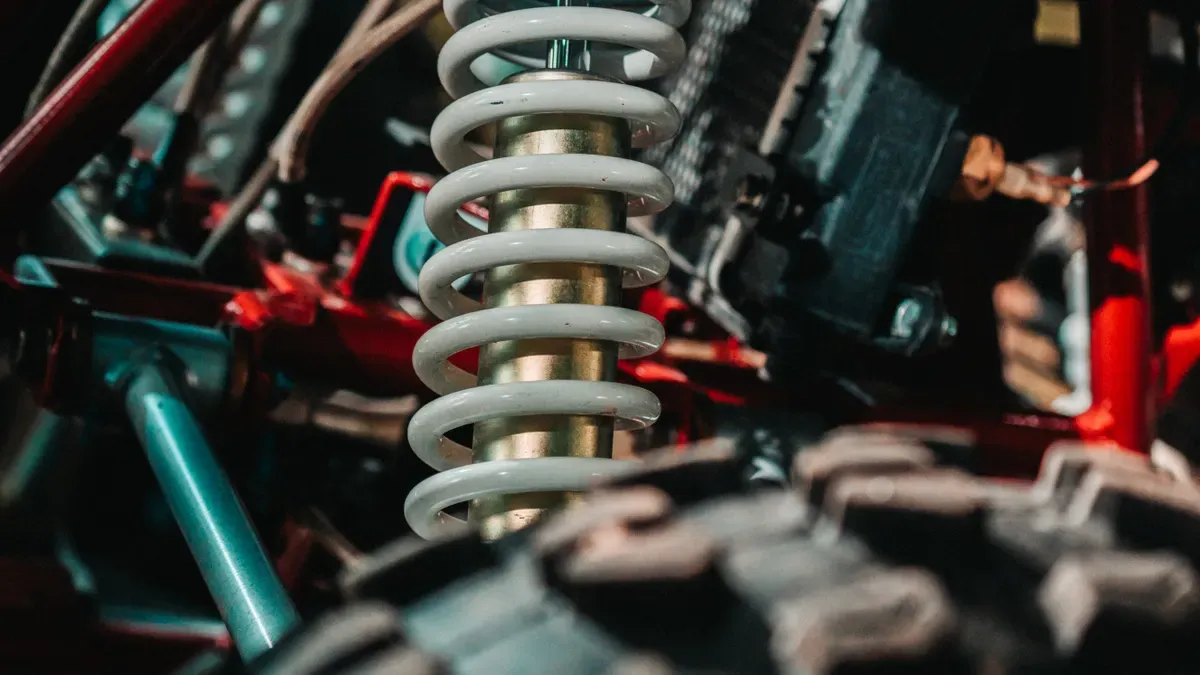
A helical compression spring is a coiled wire part that stores mechanical energy by pushing back against a load applied along its centerline. As the spring deflects, it pushes two surfaces apart with a force you can predict and repeat. This allows controlled motion, vibration absorption, and energy storage in things from pen mechanisms to automotive suspensions.
When your tire hits a bump, the suspension spring compresses. The coils squeeze together and store energy. Axial compression of a helical spring creates torsional shear stress in the wire. The spring then releases that energy as it expands back to its original shape. This cycle of compression and expansion is the core of shock absorption. The spring absorbs the shock forces from the road and minimizes impact on your chassis.
The spring's geometry and material properties determine how it responds. The axial force and deflection relate through the spring's dimensions. A small change in wire diameter makes a big difference. Increasing the wire diameter by 10 percent increases the spring rate by approximately 46 percent. This sensitivity shows why engineers carefully specify every dimension of a coil spring.
Your wheels move up and down to absorb bumps. The springs allow this motion while keeping the chassis stable. Without this movement, every road irregularity would transfer directly to your vehicle's frame.
Spring rate is the amount of force needed to compress the spring a given distance. Automotive suspension spring rates are commonly expressed in N/mm. For example, typical front suspension springs range from 18 to 35 N/mm. Performance vehicles often use 40 to 60 N/mm to reduce body roll. Spring rate is also called spring constant, spring stiffness, or spring hardness.
You can calculate spring rate for a coil spring with a known formula. The spring rate equals the shear modulus of the wire material times the wire diameter to the fourth power, divided by eight times the mean coil diameter cubed times the number of active coils. The table below shows the variables.
|
Symbol |
Meaning |
Unit (SI) |
|---|---|---|
|
k |
Spring rate |
N/mm |
|
G |
Shear modulus |
MPa |
|
d |
Wire diameter |
mm |
|
D |
Mean coil diameter |
mm |
|
Na |
Number of active coils |
— |
Spring rate affects your ride frequency, which is the undamped natural frequency of the vehicle body in ride. Ride frequency is the primary determinant of occupant comfort and handling. A higher ride frequency corresponds to a stiffer ride. Stiffer rides are generally less comfortable for passengers. Selecting spring stiffness is the first step in setting ride frequencies. This makes spring rate an upstream design factor that influences comfort through ride frequency.
The ride frequency primarily determines the level of comfort the occupants experience and the handling of the car. ... The higher the frequency, the stiffer the ride. So, this parameter can be viewed as normalized ride stiffness.
A softer coil spring gives you a more comfortable ride. A stiffer coil spring improves handling and reduces body roll. Engineers balance these trade-offs for each vehicle. Your suspension system relies on this balance to keep you safe and comfortable. Shock absorbers work with the springs to control motion and prevent endless bouncing.
Types of Suspension SpringsA coil spring is the most common kind found under passenger cars and light trucks. Manufacturers make a coil spring from metal wound into a tight spiral shape. This design handles both holding up weight and soaking up impacts very well. According to the Automotive Spring Market report, a coil spring holds a leading 55.3% share of the automotive spring market. That lead comes from its versatility, durability, and efficiency. A coil spring fits neatly into modern suspension systems. You will find a coil spring on almost every new sedan, hatchback, and crossover. A coil spring also shows up on many SUVs and light-duty pickups. The coil spring design saves space and lowers unsprung weight. A coil spring works just as well at the front and rear of a vehicle. Engineers can tune a coil spring for comfort or performance. This flexibility explains why the coil spring stays the default choice for most automakers.
A leaf spring does a different job. You will usually find a leaf spring pack on heavy commercial vehicles, trucks, and trailers. A leaf spring uses stacked metal plates instead of one wound wire. This stacked design holds much heavier weights, often rated for several tons. Manufacturing costs stay lower for a leaf spring because the stacked plate design is simpler. A leaf spring gives stability, support, and comfort by absorbing road shocks. Commercial trucks depend on a leaf spring for long hauls under heavy loads. Trailers also use a leaf spring to spread weight evenly across the axle. Without a working leaf spring, a vehicle may have poor handling and uneven tire wear.
An air spring is a rubber or plastic bag that fills with air or lets air out to change vehicle height. You can raise or lower your ride by adding or removing air pressure. This adjustability makes an air spring popular in luxury vehicles and transport trucks. The Automotive Spring Market report notes that an air spring is the fastest-growing segment. Drivers value the better ride quality and adjustable suspension properties. An air spring lets you stiffen the ride for heavy loads. You can soften it for a smooth highway cruise. An air spring also helps level the vehicle when you tow a trailer. This technology costs more than a traditional coil spring. An air spring also needs more maintenance over time. Still, the air spring offers a level of control that a coil spring cannot match.
Springs vs. Shocks and Wear SignsSprings and shock absorbers do different jobs. Springs support the vehicle's weight and absorb the first impact from the road. Shock absorbers control spring movement and stop the bouncing. You need both parts working together for a safe ride.
The table below shows how these two parts differ.
|
Function |
Springs |
Shock Absorbers |
|---|---|---|
|
Primary role |
Support weight and absorb initial impacts |
Control spring movement and prevent bouncing |
|
How they work |
Compress and extend to store and release energy |
Convert kinetic energy into heat through hydraulic resistance |
|
Effect on ride |
Maintain ride height and cushion bumps |
Prevent excessive bouncing and control wheel movement |
|
If worn |
Sagging ride height, bottoming out, uneven tire wear |
Excessive bouncing, poor handling, longer stopping distances |
When your wheel hits a bump, the spring stores mechanical energy and then releases it. Without a damper, the spring would bounce the body up and down for several seconds. This causes loss of tire contact and steering. The shock absorbers sit in parallel with the spring and force hydraulic oil through small orifices in a piston. Pushing fluid through the restriction converts kinetic energy into heat. The damper body can reach 120 °C on rough roads. The damper resists motion proportionally to piston velocity. This kills oscillation within 1 to 2 cycles instead of the 10+ cycles an undamped spring would produce.
Shock absorbers do not hold weight. Their purpose is to control or dampen the motion of the spring. A piston attached to the shock rod moves up and down inside hydraulic fluid. Orifices in the piston regulate fluid transfer between chambers. This process brings the spring motion back to ride height in one oscillation. This shock absorption keeps you in control.
Worn springs show clear warning signs. Your ride height may sag lower than normal. You might notice excessive bouncing after you hit a bump. Unusual noises like clunks or squeaks can also point to worn springs. A worn coil spring may break or lose its shape over time. Worn shock absorbers cause poor handling and longer stopping distances.
You can inspect your suspension system for these signs. Look at the gap between your tires and the wheel arches. Check for uneven tire wear. Push down on each corner of your vehicle and watch how it rebounds. A healthy suspension returns to normal quickly. A worn one bounces several times.
Most vehicle manufacturers recommend a check-up every 50,000 miles.
Basic maintenance helps your springs last longer. Keep your vehicle within its weight limits. Avoid slamming into potholes at high speed. Wash road salt and grime off your coil springs and shock absorbers regularly. If you suspect a problem, consult a professional mechanic. A trained eye can spot cracks, leaks, or sagging that you might miss. Replacing worn coil springs and shock absorbers together gives you the best performance.
A suspension spring holds up your car and soaks up bumps from the road. The squish-and-bounce action handles the bumps. Spring rate sets how stiff your ride feels. Springs and shocks team up, but each does its own job. A worn coil spring can make your car sag and handle poorly. Worn coil springs change both comfort and safety. Check your car's ride height and listen for odd sounds. A good coil spring works reliably over time. If you see sagging or too much bouncing, see a mechanic. A well-cared-for suspension keeps your drive smooth and safe. This part affects your safety and ride comfort every day.
FAQSprings have no fixed replacement interval. Many last the life of the vehicle. Road salt, heavy loads, and rough pavement shorten that life. Manufacturers often suggest a suspension check-up every 50,000 miles. Replace springs when you spot cracks, sagging, or a broken coil.
You can, but you probably should not. A new spring works against a worn damper. The mismatch causes poor control and faster wear. Replacing both together gives you balanced performance. Your mechanic can confirm whether your shocks still have life left.
Not always. A stiffer spring reduces body roll and sharpens response. It also transmits more road harshness to the cabin. Typical front springs run 18 to 35 N/mm, while performance setups reach 40 to 60 N/mm. Engineers balance grip against comfort for each vehicle.
Bouncing points to weak damping, not a weak spring. A spring stores energy and releases it. Shock absorbers convert that motion into heat and stop the oscillation. Worn shocks let the body keep bouncing. Test each corner by pushing down and watching the rebound.
Neither wins outright. Air springs adjust ride height and stiffness on demand, which suits luxury cars and heavy trucks. Coil springs cost less, need less upkeep, and dominate the market. Your load, budget, and driving needs decide the better fit.
Please leave your requirements and contact information, and we will send you the quotation information as soon as possible.