Date: 2026.09.16 Click: 39
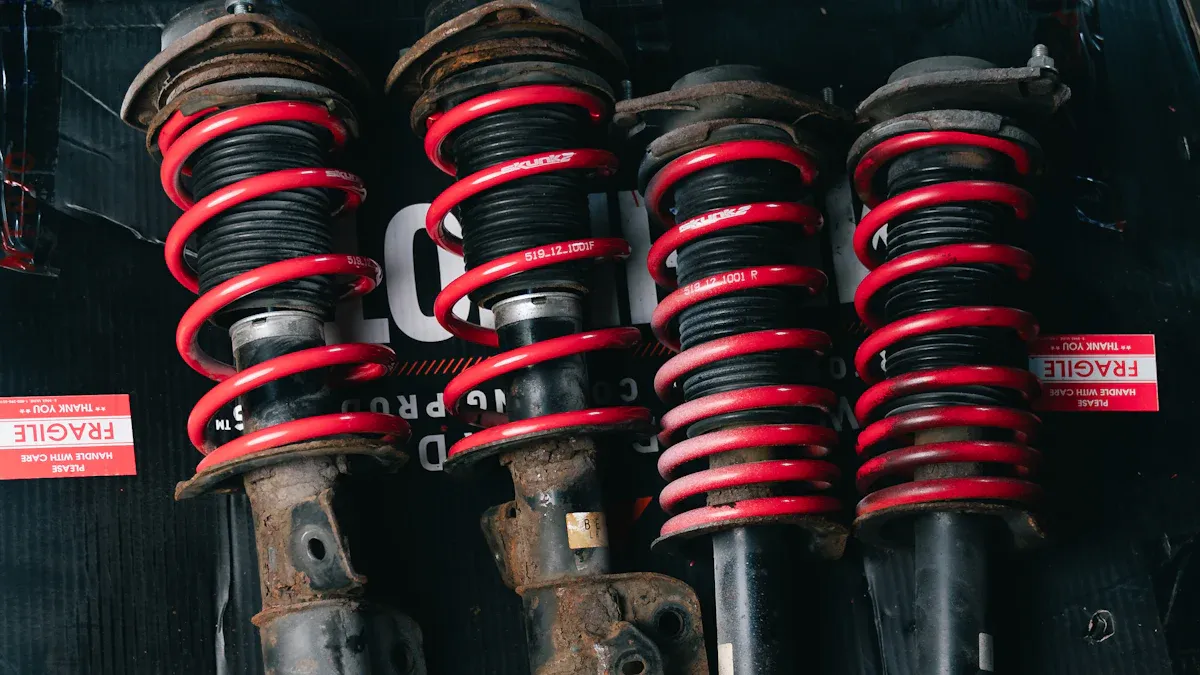
If your truck is lifted or lowered, aftermarket control arms give you the adjustment and strength you need. For a stock-height daily driver, OEM control arms are the safer, cheaper choice. Aftermarket control arms fix alignment problems that a factory control arm just cannot correct. OEM control arms, on the other hand, give you a quiet ride and a proven fit for unmodified vehicles. Your suspension setup decides which path makes sense for you.
Key TakeawaysOEM control arms suit stock vehicles. They provide a quiet ride and perfect fit.
Aftermarket control arms fix alignment for lifted or lowered vehicles. They offer adjustability and strength.
OEM arms cost more upfront. Aftermarket arms save money but may need more care.
Tighten control arm bolts only at ride height. This prevents bushing damage.
Match control arms to your driving needs. Stock drivers save with OEM. Modified vehicles need aftermarket.
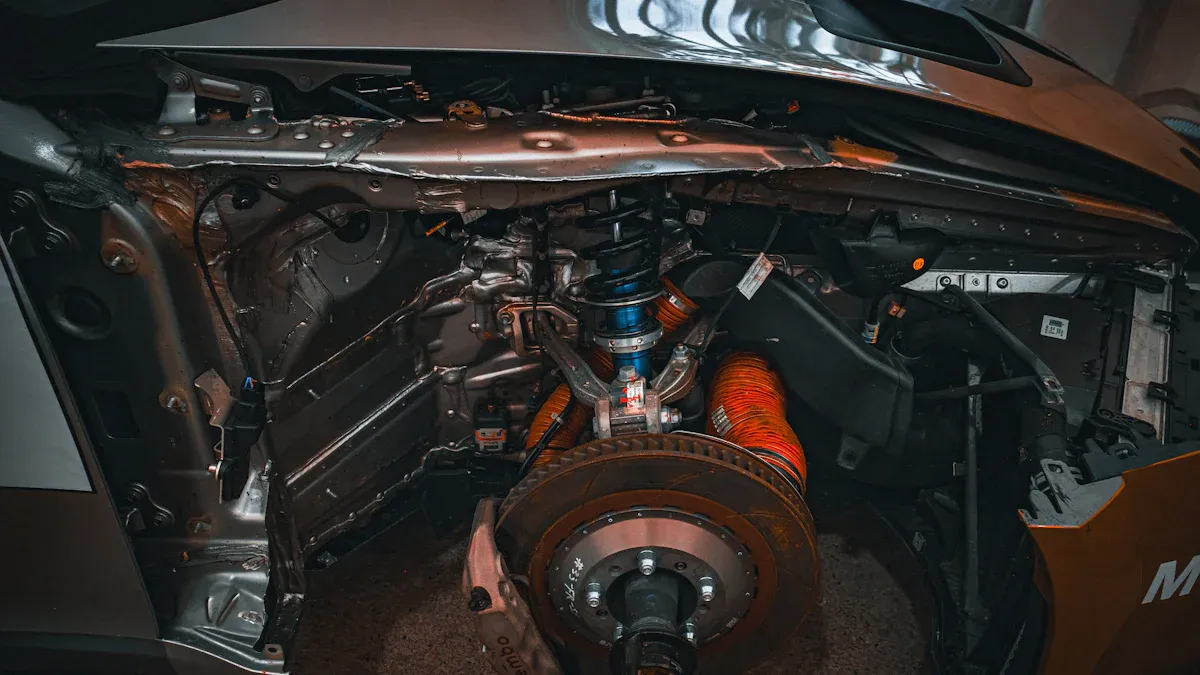
Factory arms have design details that aftermarket copies often leave out. Honda OEM arms, for example, use water-blocking brackets that keep moisture away from the joint. The metal is also thicker in key stress areas, so the part keeps its shape over many miles. These features matter most on a truck or car that stays at stock height.
The bushings tell a similar story. OEM upper control arms come with rubber bushings made to match your vehicle's weight and suspension travel. Rubber soaks up road noise and vibration, so your cabin stays quiet on the highway. A stiffer bushing might make steering feel sharper, but it also sends more harshness into the frame. For a daily driver, that trade-off rarely pays off.
Upfront price is where OEM parts hurt. A single Honda OEM arm often costs around $325 each. Aftermarket brands like Moog and Mevotech sell similar arms for roughly $80. That gap looks huge on paper, and many shoppers stop right there.
The full picture changes over time. Premium factory-direct aftermarket arms can cut procurement budgets by 40% to 60%, and they carry almost no failure risk. Budget aftermarket arms are a different story. Their apparent savings disappear once you add warranty claims, repeat alignments, and secondary repairs.
Sourcing premium aftermarket control arms directly from the manufacturer can cut procurement budgets by 40% to 60%, while also preventing secondary costs such as warranty labor claims, wheel alignment expenses, and brand damage. This combination of lower upfront cost and reduced lifecycle risk is what drives down total cost of ownership over a multi-year period.
Cost & Lifecycle Metric
OEM Control Arms
Premium Factory-Direct Aftermarket
Budget Aftermarket
Initial Procurement Cost
Very high due to brand markup and multi-tier distribution
Competitive wholesale pricing, 40–60% lower procurement budgets
Deceptively cheap but unreliable
Supply Chain Efficiency
Slow, dependent on automaker allocations
Agile, scalable direct-from-factory shipping
Erratic and unpredictable
Lifecycle Financial Risk
Low failure risk but erodes repair profitability
Negligible failure risk, improves labor output
High warranty claim rates and reputational damage
5-Year TCO Impact
High upfront cost offsets reliability
Drastically lowers TCO by eliminating early-life warranty returns
Apparent savings erased by secondary repair and warranty costs
For a stock vehicle, oem control arms still make sense when you value a proven fit and a quiet ride above the lowest sticker price. You pay more at the counter, but you skip the guesswork.
Aftermarket Control Arms for Modified Vehicles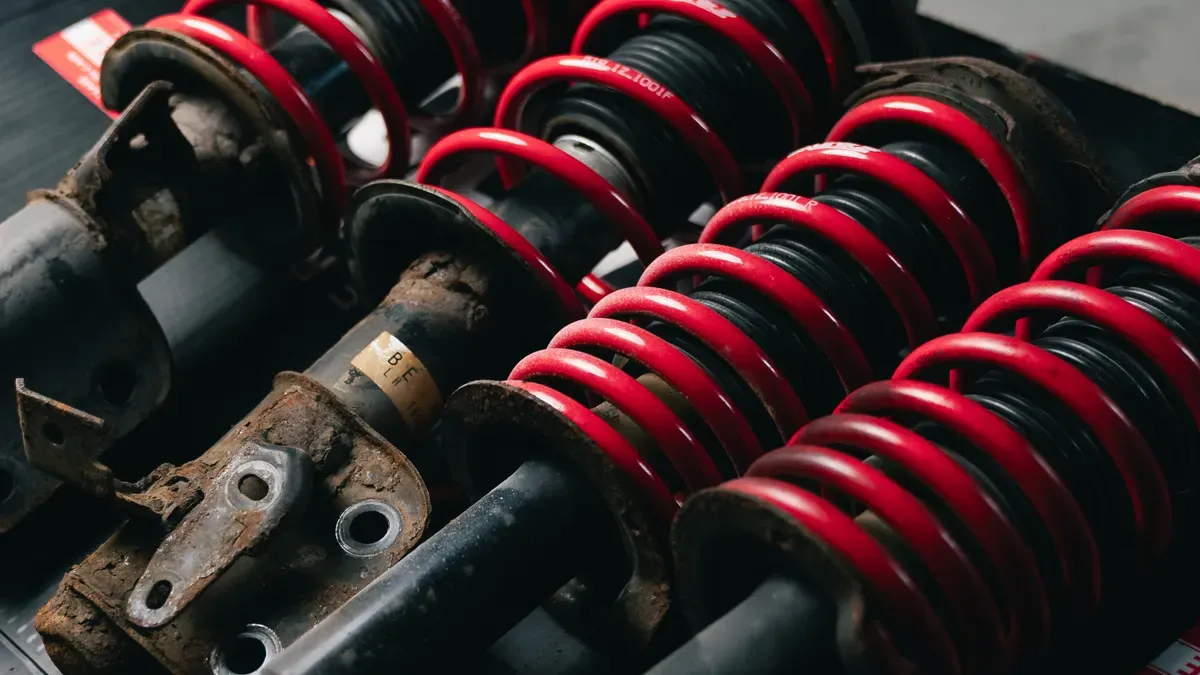
Aftermarket control arms fix problems that factory parts just can't solve. When you lower a car, the suspension geometry moves out of spec. This causes too much negative camber, toe changes, and caster wandering. Adjustable lower arms let you make the arm longer or shorter to move the wheel back into place. This adds positive camber back and brings alignment into a street-friendly range. The tire then sits more upright and wears evenly. A four-wheel performance alignment after installation is a must, because any change in arm length or ball-joint location changes camber, caster, and toe.
Lifted trucks run into the same geometry problems. Adjustable arms have a threaded body that lets you change eye-to-eye length. This pushes the axle forward or back to set the right caster and pinion angles. On link-style suspensions, this is the most precise way to correct pinion angle. The table below shows how lift height decides which arms you need.
|
Lift Height |
Control Arms Needed |
How It Improves Driveline Angles |
|---|---|---|
|
0 – 2.5" |
Lower front pair |
Restores caster angle and repositions front axle |
|
2.5 – 4" |
Lower fronts + upper rears |
Adds rear pinion angle correction to eliminate vibration |
|
4.5" and up |
All eight arms |
Centers both axles and corrects all angles |
For a 2-inch leveling kit, aftermarket upper control arms with an indexed ball joint cup fix ball joint positioning and allow more down travel. Stock arms may work if alignment stays in spec, but upgrades become necessary when alignment can't be corrected.
Material choice is what sets premium aftermarket control arms apart from budget options. Tubular chromoly arms offer high tensile strength and lighter weight compared to mild steel, making them suitable for racing and adjustable control arms. Forged steel arms have a denser grain structure and last longer under repeated stress than stamped steel versions. Generic aftermarket rubber bushings, though, are often hit or miss in quality. You may get a quiet ride, or you may get early wear and noise. Rear lower control arms from reputable brands use better bushing compounds that resist deflection under load. Always check the brand's reputation before you buy.
Key Differences Between Control Arm TypesThe joint design of each control arm type creates the biggest performance gap. Stamped steel OEM arms use a standard ball joint with limited movement. These joints are sealed and adjust themselves. A typical OEM ball joint lasts about 250,000 miles without needing grease. Tubular aftermarket arms use a uniball design instead. A uniball gives you much more range of motion and higher strength. The bolt that attaches it goes all the way through the joint. This means the joint cannot pull out of the socket during hard use.
Uniballs need more care than sealed ball joints. Most use Teflon between the housing and the spherical ball. You should use spray Teflon lube instead of regular grease. Regular washing after mud or winter salt keeps uniballs working. Neglect leads to squeaking and early failure. This trade-off makes sense for off-road trucks and track cars that get regular maintenance. OEM car makers avoid uniballs for typical consumers.
The table below shows how the two designs compare:
|
Feature |
Stamped Steel OEM Arms |
Tubular Aftermarket Arms |
|---|---|---|
|
Joint design |
Standard ball joint, limited movement |
Uniball, much more range of motion |
|
Material |
Stamped steel |
Tubular chromoly |
|
Strength |
Moderate |
High |
|
Weight |
Heavy |
Medium (lighter than stamped) |
|
Bushing type |
Rubber (comfort) |
Polyurethane, Delrin, or spherical bearings |
|
Caster adjustability |
Fixed, no adjustment |
Often adjustable |
|
Designed ride height |
Factory stock height only |
Built for a range of lift heights |
|
Construction method |
Pressed from sheet metal |
Welded tubing |
The upfront price difference is huge. A single Honda OEM arm costs about $325 each. Aftermarket brands like Moog and Mevotech sell similar parts for roughly $80. That gap makes aftermarket control arms look like the clear choice. But the full cost includes maintenance and lifespan.
OEM sealed ball joints need almost no attention. You get about 250,000 miles of quiet operation from OEM upper control arms and their rubber bushings. That longevity comes from water-blocking brackets and thicker metal in stress areas. Aftermarket control arms with uniball joints need regular cleaning and lubrication. If you neglect them, you replace them sooner.
Bushing quality also matters. OEM rubber bushings absorb road noise and vibration well. Generic aftermarket rubber bushings are hit or miss. Rear lower control arms from reputable brands use better bushing compounds. These compounds resist bending under load. Quality rear lower control arms prevent bushing wear under hard acceleration. Front lower control arms from budget brands often use the cheapest bushings. That leads to early wear and noise.
For a modified vehicle, aftermarket control arms are needed. You need them to fix suspension geometry after a lift or drop. Rear lower control arms on a lifted truck benefit most from tubular design. The increased strength handles off-road impact and movement. Front lower control arms on a lowered car need adjustability to fix camber. Rear lower control arms with adjustable length give you precise control over pinion angles.
OEM control arms give you a quieter ride for daily driving. The extra upfront cost buys sealed joints and a proven fit. Adjustable arms solve problems that factory parts cannot fix. If you drive a stock-height daily driver, OEM control arms give you the lowest total cost. If you lift or lower your truck, aftermarket arms are worth the extra maintenance. Match the arm to your use case.
Choosing the Right Control ArmFor everyday driving, most mechanics say to stay with OEM parts. OEM control arms work best for vehicles at stock height. The rubber bushings soak up road noise well. The sealed ball joints do not need grease or adjustment. You get a quiet ride and a fit that never needs shims.
Even OEM arms can fail fast if you install them the wrong way. The most common mistake is tightening the bolts while the suspension hangs in the air.
Tighten control arm bolts only when the vehicle rests at its normal ride height on the ground. This lets the rubber bushing settle in its natural position. Tightening with the suspension hanging twists the bushing and tears it apart within a few thousand miles.
Other installation mistakes cause problems too:
Reusing single-use fasteners leads to loose joints
Using the wrong torque strips threads or leaves bolts too loose
Installing the wrong control arm creates alignment issues you cannot fix
Damaging a ball-joint boot during installation lets dirt in
Skipping the alignment afterwards wears tires fast
Each mistake adds cost later. Follow the factory steps and your OEM arms will last past 200,000 miles. For a stock daily driver, OEM control arms give you the lowest total cost. You pay more upfront, but you avoid future repairs.
Once you lift or lower your vehicle, stock parts hit their limits. Aftermarket control arms fix problems that factory parts cannot solve. They correct the suspension geometry changes that come with a lift or drop.
Your lift height decides when you need upgraded arms. Lifts under two inches rarely need upgrades for street use. Two-inch lifts are the borderline. Stock arms handle street driving and light trail use. But upgrades shift from optional to recommended at this height. Two- to three-inch lifts benefit from upgraded arms, especially for off-road use. Three-inch lifts push stock arms past their comfortable range. Most manufacturers recommend upgraded arms at this point. Lifts over three inches should include control arm upgrades as standard practice.
Upper control arms become worth considering once the front lift reaches about 2.5 to 3 inches, particularly on IFS trucks. Some trucks benefit from upgraded UCAs at lower heights. Others align fine with stock arms at a mild level. You must check your alignment specs to decide.
Towing heavy loads adds another reason for upgrades. Towing puts extra stress on the suspension system. Upgraded control arms give better strength and articulation on lifted trucks. Rear traction bars reduce axle wrap and improve straight-line stability when towing heavy items. These upgrades matter if you tow boats, trailers, or work equipment often.
Rear lower control arms from premium brands use better bushing compounds. These arms resist deflection under load during acceleration. Front lower control arms on lowered cars need adjustability to fix camber problems. Adjustable arms let you bring the wheel back into proper alignment.
With any aftermarket arm, you must clock the bushings correctly during installation. The same rule applies: tighten bolts only at ride height. This prevents early bushing wear and keeps your alignment stable.
Match the arm to your use. Stock daily driver? Stick with OEM. Modified suspension? Aftermarket control arms fix geometry issues. Know your needs and choose accordingly.
Your vehicle's use decides the right control arm. A stock daily driver should stay with OEM control arms. They give you a reliable, quieter ride and a proven fit. A lifted or lowered vehicle needs aftermarket control arms instead. They adjust your alignment, add strength, and solve geometry problems that factory parts cannot fix.
You now have a simple rule to follow. Match the part to how you actually drive. Do not pay for adjustability you will never use. Do not force stock parts past their limits either. Know your driving needs, choose accordingly, and your suspension will thank you.
FAQFor lifts under two inches, stock arms work for street driving. Higher lifts push alignment out of spec. You then need aftermarket control arms to correct geometry and prevent tire wear.
Rear lower control arms handle axle positioning under load. Stock rear lower control arms flex during heavy towing. Upgraded rear lower control arms reduce axle wrap and keep the driveline stable.
Front lower control arms on lowered cars often need length adjustment. This fixes excessive camber. Stock arms lack this adjustability, so you must upgrade.
Tighten control arm bolts only at ride height. Tightening with the suspension hanging twists the bushing. This tears it apart within a few thousand miles.
OEM sealed ball joints last about 250,000 miles with no maintenance. Aftermarket uniball joints need regular lubrication. For daily driving, OEM joints give you less hassle.
Please leave your requirements and contact information, and we will send you the quotation information as soon as possible.