Date: 2026.09.15 Click: 43
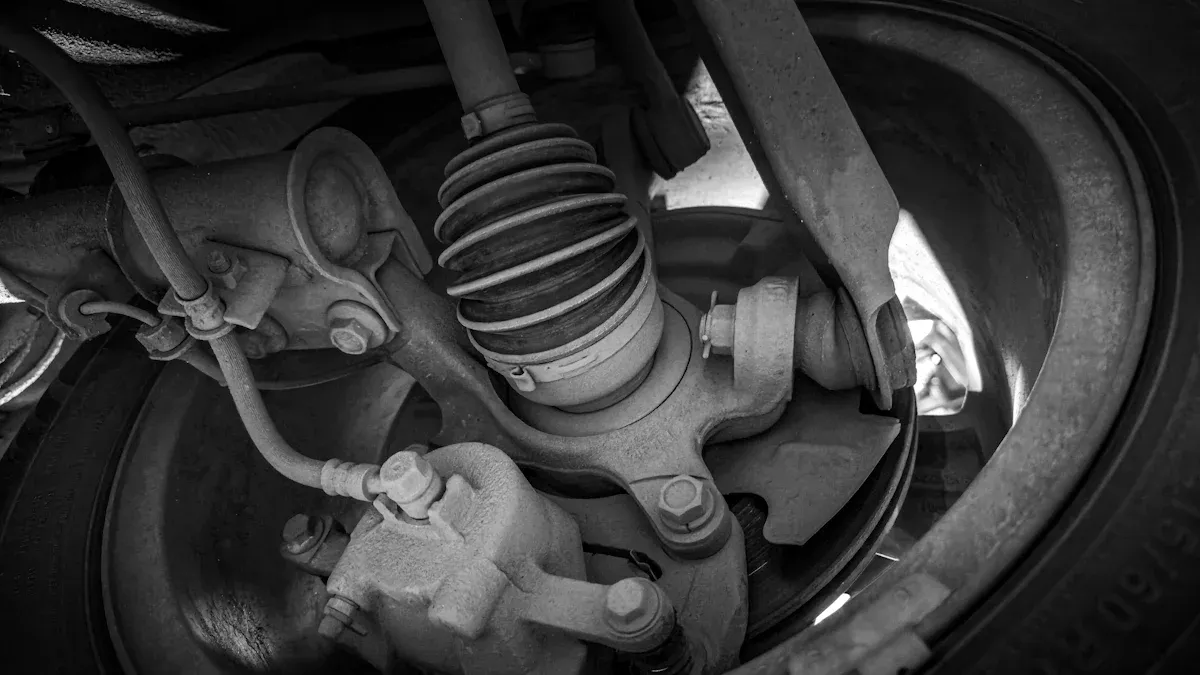
A stabilizer bar is a torsion spring that links the left and right sides of your suspension. Think of it as a metal bar that twists to keep your car flat during turns. When you drive through a curve, this bar resists body roll and helps your tires stay planted on the road.
This simple part plays a big role in your vehicle's stability. It improves your control behind the wheel and keeps you safer in emergency maneuvers. Understanding how it works helps you appreciate your car's handling and spot problems early.
Key TakeawaysA stabilizer bar reduces body roll during turns. It keeps your tires planted on the road.
The bar acts like a torsion spring. It resists twisting when one wheel moves up.
A thicker bar improves stability. Too much thickness can reduce traction on bumpy roads.
Listen for clunking noises while driving. Check for loose steering to catch problems early.
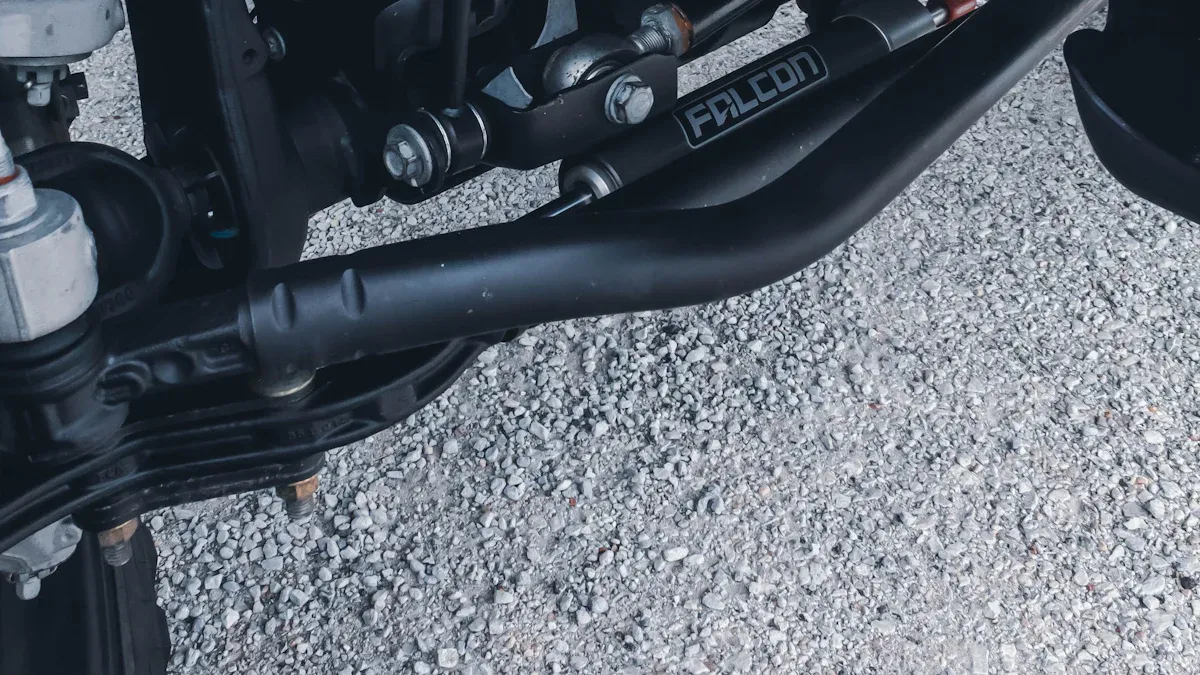
A stabilizer bar is a metal rod that joins the left and right sides of your car's suspension. People also call it a sway bar or anti-roll bar. This part works like a torsional spring. It twists along its length when the two sides of the suspension move in opposite ways. That twisting motion creates resistance and keeps your car flatter through turns.
The first stabilizer bar patent was granted to Canadian inventor Stephen Coleman on April 22, 1919.
The main job of this bar is to lower body roll. When you take a corner, your car's body tends to lean toward the outside of the turn. The stabilizer bar pushes back against that lean. It ties both sides of the suspension together. As one side compresses, the bar sends force to the other side. This keeps the vehicle more level and gives you better control behind the wheel.
The bar also adds stability in everyday driving. It limits how much the suspension moves up and down on each side. This gives you a more predictable feel on the road. During emergency maneuvers, the bar helps your tires stay in touch with the ground. That extra grip can make a real difference in a sudden swerve or hard stop.
Most stabilizer bars use a U-shaped steel design. The bar runs across the width of your car. Its ends attach to the suspension system on each side. The middle section mounts to the chassis with bushings. These bushings let the bar rotate as it twists.
The ends of the bar connect through stabilizer links. These links come in a few styles. Each style uses different materials for strength and durability.
|
Stabilizer bar link style |
Common materials |
Construction notes |
|---|---|---|
|
Bolt type |
Steel |
Used for strength, durability, reliability, and cost-effectiveness |
|
Hybrid type |
Steel or aluminum body with ball joint ends |
Combines materials to improve durability and performance while reducing weight |
|
Ball joint style |
Forged steel, aluminum, or high-grade plastic |
Uses ball joints at each end for greater articulation and longevity |
The bar itself is a solid piece of spring steel. It must twist without breaking. The bushings and end links allow movement while holding the bar in place. A well-built anti-roll bar system uses these parts together to manage force.
The primary functions of this part show up clearly in how your car handles.
|
Primary Function |
How It Works |
Result in Vehicle Dynamics |
|---|---|---|
|
Reduce body roll |
Connects the left and right sides of the suspension and resists upward movement on one side during a turn, transferring force to the opposite side |
Keeps the vehicle more level during sharp turns or sudden maneuvers |
|
Improve vehicle stability |
Minimizes excessive suspension movement by linking both sides to the chassis |
Enhances overall stability and a more controlled driving experience |
|
Enhance cornering performance |
Distributes force across both sides of the suspension |
Provides more stable and predictable cornering, especially for high-performance and off-road vehicles |
|
Improve traction |
Limits body roll so tires maintain better road contact |
Increases traction, particularly in challenging driving conditions |
These functions work together every time you drive. The bar is simple in shape but critical in purpose. It turns a soft, leaning ride into a flatter, more planted one.
How Does a Sway Bar Work?This bar acts as a torsion spring. Metal resists twisting naturally. When your car leans into a turn, the bar twists along its length. That twisting creates resistance. This resistance pushes back against the rolling motion of your vehicle.
The bar uses a lever arm to amplify this effect. The lever arm is the distance from the bar's center to the attachment point on your suspension. A longer lever arm increases the twisting resistance. Think of it like a wrench. A longer wrench gives you more leverage to turn a bolt. The bar works the same way. It turns a small twist into a large force that counters lean.
Engineers calculate how much torque the bar can handle. The formula looks like this:
Twist = (2 x torque x length) / (pi (3.14) x diameter^4 x material modulus)
This equation shows torque depends on four things. The twist angle matters. The bar length matters. The material properties matter. But the diameter matters most. The diameter appears to the fourth power. That means a small change creates a huge change in stiffness.
Look at an example. Going from 0.5 inches to 0.75 inches changes the polar moment of inertia from 0.00614 in⁴ to 0.0311 in⁴. That makes the bar five times as rigid. And that is only a 50% increase in diameter. A small change in thickness creates a huge jump in stiffness.
Car makers choose the bar thickness carefully. A thicker bar gives more roll resistance. A thinner bar gives a softer feel. They balance comfort with handling for each model.
The sway bar transfers force from one wheel to the other during cornering. Here is how it happens step by step:
It links both sides of your suspension through end links. These connect to the control arms or struts on each wheel.
When you turn, weight shifts to the outside wheels. The outside suspension compresses. The inside suspension extends. This creates body roll.
The outside wheel moves up while the inside wheel drops. The bar twists along its length. One end rotates while the other stays relatively fixed.
The twisting bar pushes down on the opposite wheel's control arm. It transfers force from the heavily loaded wheel to the less loaded one.
This resistance to uneven movement acts like a torsion spring. It keeps your car flatter through the turn.
The sway bar only works when the two wheels move unevenly. If both wheels hit a bump at the same time, the bar rotates without twisting. Normal suspension travel stays unaffected. But when only one wheel moves, one end of the bar tries to rotate while the other stays still. The bar twists. The thicker the bar, the more force required to twist it. That increases roll stiffness.
When the bar twists, it stores energy like a spring. That stored energy pushes back against the body lean. The bar forces the inside and outside wheels to work together. Without this link, each wheel would move on its own. The car would lean much more in turns.
One caution matters here. Too much stabilizer bar can reduce traction. A very stiff bar limits each wheel's independent movement. On uneven surfaces, one wheel might lift off the ground. That reduces grip and control. On smooth pavement, a stiff bar gives excellent stability. But on bumpy roads, the trade-off becomes noticeable.
The stiffness balance between front and rear also affects handling.
|
Condition |
Effect on Weight Distribution / Handling |
|---|---|
|
Stabilizer bar reduces body roll during cornering |
Weight is distributed more evenly across all tires, improving grip and stability |
|
Stiffer front stabilizer bar |
Front suspension becomes stiffer relative to rear, shifting weight distribution toward the front tires, causing more understeer |
|
Stiffer rear stabilizer bar |
Rear suspension becomes stiffer relative to front, shifting weight distribution toward the rear tires, causing more oversteer |
Your car's handling depends on this balance. A stiffer front bar causes understeer. The front end pushes wide in turns. A stiffer rear bar causes oversteer. The rear end slides out. Car makers use this to tune the handling character of each model. The right setup gives you predictable behavior through every turn.
Benefits for Suspension and SafetyA sway bar directly cuts lean during turns. Your vehicle's springs also reduce roll, but the bar is about twice as effective for the same spring rate. This gives you reduced body roll without making your ride harsher. The result is a car that corners flatter and responds more quickly to your inputs.
Reducing lean shortens the distance the body must rotate to reach its final angle. This lets weight transfer happen faster. Faster weight transfer gives you more immediate feedback about available grip. Your car reacts quicker during transitional moves. Less body roll also means less rotational torque to overcome when changing direction. This can improve vehicle stability and helps you feel more confident behind the wheel.
However, there is a trade-off. Too much stiffness in your suspension system can hurt traction on uneven roads. A very stiff bar limits how much each wheel can move on its own. On bumpy pavement, an inside wheel might lift a little, reducing grip. The key is balance. The right bar stiffness improves stability and comfort together. You get the benefit of reduced body roll without giving up ride quality.
During cornering, weight shifts toward the outside tires. This changes the tire contact patch and reduces grip. A stabilizer bar resists this lean by transferring force to the inside suspension. The bar keeps your vehicle flatter. This helps the tires stay more evenly planted on the pavement. A steady contact patch means better traction and more control through turns.
The relationship between tire load and grip is not linear. Grip efficiency drops as load increases. When a stabilizer bar transfers weight from the inside wheel to the outside wheel on the same axle, it overloads one tire while unloading the other. This reduces total lateral grip on that axle.
This effect allows tuning. Increasing stiffness at one end reduces total grip at that end. This shifts the balance toward the other axle. A stiffer front bar promotes understeer. A stiffer rear bar promotes oversteer. Car makers use this to achieve the desired handling character. The right setup gives you predictable behavior and enhanced cornering performance. This directly contributes to vehicle performance in your daily driving.
Signs of Failure and Maintenance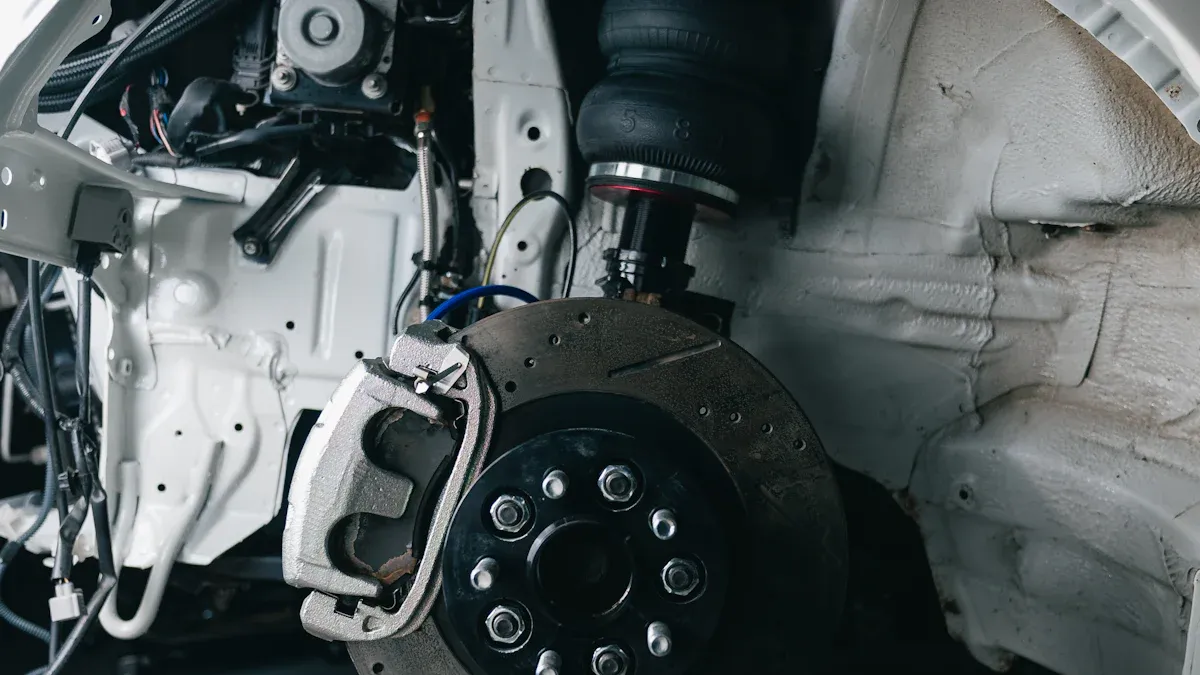
You will often hear a problem before you see one. A worn sway bar link makes a metallic clunking or knocking sound when you drive over bumps or at higher speeds. This noise comes from too much play in the link. Bad links make a higher-pitched clunk, while worn bushings produce a lower-pitched thud. Listen for thunking, clunking, knocking, or banging as you drive.
Other symptoms affect how your vehicle feels on the road. Your steering may feel loose or slow to respond. The car might feel unstable when you turn, change lanes, or drive at highway speeds. You may notice too much body roll in corners because the bar no longer resists lean. Uneven tire wear also appears as weight shifts to the outer edge of your tires during turns.
|
Symptom |
Description |
|---|---|
|
Clunking noises |
A metallic clunking or knocking sound when driving over bumps or at higher speeds, caused by too much play in the sway bar link. |
|
Loose steering |
Steering feels slow to respond or too loose while turning. |
|
Unstable feeling |
The vehicle feels unstable, especially when turning, changing lanes, or driving at higher speeds. |
|
Uneven tire wear |
Weight shifts to the outer edge of the tires during turns, causing uneven tire wear. |
|
Excessive body roll |
The suspension becomes less effective at reducing body roll, leading to too much lean in turns. |
You can inspect the sway bar yourself with a few careful steps. First, confirm when the symptom occurs. Note whether the noise happens over small bumps, during turns, braking, or when wheels move unevenly. Sway bar faults are often more noticeable with differential wheel movement. Second, inspect the bushing visually. Safely support the vehicle per manufacturer instructions. Check for split or missing rubber, an enlarged inner hole, rubber extrusion, shiny metal or rust dust, an off-center bar, a bent bracket, oil contamination, or loose bracket bolts. Surface cracks alone may not indicate failure. The key is whether the bushing holds the bar without too much movement.
Third, check for movement. Apply controlled force to the sway bar near the bushing and compare both sides. Look for too much lateral or vertical movement, contact with the bracket, or a visible gap. Never work under a vehicle supported only by a jack. Fourth, inspect the sway bar links. Hold or load the link and check its ball joints, studs, and bushings. A loose link can transmit noise through the bar. Fifth, rule out nearby components. Check control arm bushings, ball joints, tie-rod ends, shock mounts, springs, brake hardware, and exhaust brackets. These often cause noises wrongly attributed to sway bar bushings.
Replacement costs vary by vehicle type. A single link replacement runs $75 to $250. Replacing both sides per axle costs $150 to $500 including parts and labor. Standard sedans fall between $150 and $300, SUVs and trucks between $200 and $400, and luxury vehicles between $250 and $500. A broken sway bar significantly affects handling, so address symptoms early.
The stabilizer bar is a simple steel spring that does an important job. It keeps your vehicle flat, steady, and easy to predict through every turn. Knowing how this part works helps you value your car's handling and spot warning signs early.
Include the stabilizer bar in your regular suspension checks. Pay attention to clunking noises. See a mechanic if body roll feels like too much. A worn sway bar makes handling hard to predict and puts your control at risk in emergencies. This part lasts a long time, but it still needs care. Ignoring worn bushings and links puts stress on other suspension parts and can lead to a cracked bar.
FAQYou will usually hear it first. A worn link or bushing makes a metallic clunking or knocking sound over bumps. Your steering may feel loose, and the car may lean too much in turns. Uneven tire wear on the outer edges is another clue.
You can drive, but you should not wait long. A broken bar no longer resists body roll. Your vehicle will lean more in corners and feel less stable at highway speeds. Handling becomes unpredictable in an emergency swerve. Get it inspected soon.
They do different jobs. A strut supports your vehicle's weight and holds the wheel in place. A sway bar links the left and right suspension and resists lean. Your car needs both parts working together for stable handling.
A single link replacement runs $75 to $250. Replacing both sides on one axle costs $150 to $500 with parts and labor. Standard sedans fall between $150 and $300. SUVs and trucks run $200 to $400. Luxury vehicles cost $250 to $500.
No. A thicker bar adds roll stiffness, but too much stiffness can reduce traction on uneven roads. It also shifts the balance between front and rear. A stiffer front bar causes understeer. A stiffer rear bar causes oversteer. Balance matters more than thickness alone.
Please leave your requirements and contact information, and we will send you the quotation information as soon as possible.