Date: 2026.08.20 Click: 2
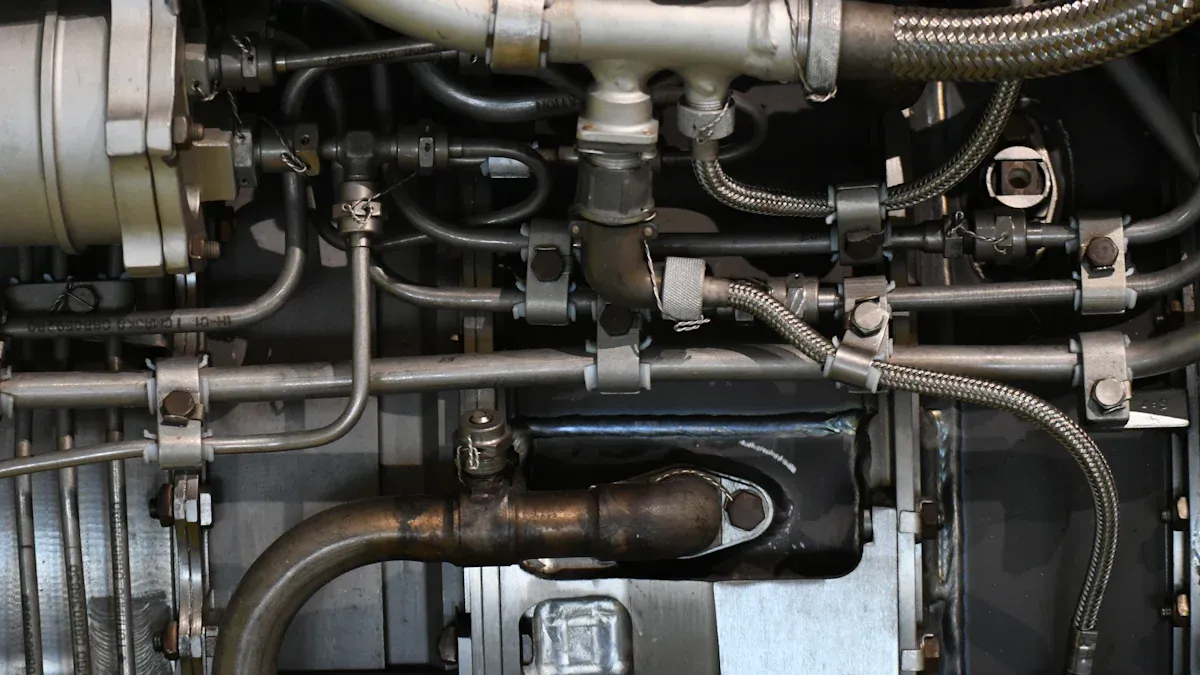
You depend on the car water pump as the main working part of your vehicle's engine. This vital part works constantly by pumping liquid coolant to control engine temperature and prevent severe heat damage. Without proper fluid cooling, intense heat builds up fast inside your engine during daily driving. Extreme internal temperatures can melt delicate rubber seals, crack cylinder heads, and bend heavy metal engine parts quickly.
|
Source |
Statistic |
|---|---|
|
Brant Jones article |
40% of all engine issues are caused by cooling system failure. |
You protect your vehicle's engine from expensive mechanical breakdown by spotting early pump failure warning signs before severe damage happens.
Key TakeawaysThe car water pump constantly pushes liquid coolant through the engine to protect it from overheating.
Clear liquid puddles beneath your vehicle and high heat gauge readings mean your water pump is starting to fail.
Loud scraping or squeaking sounds from under the hood alert drivers to damaged water pump bearings.
Changing your water pump while getting your timing belt fixed saves you a lot of money on labor costs.
Replacing a broken pump quickly stops expensive engine damage and keeps your car driving well.
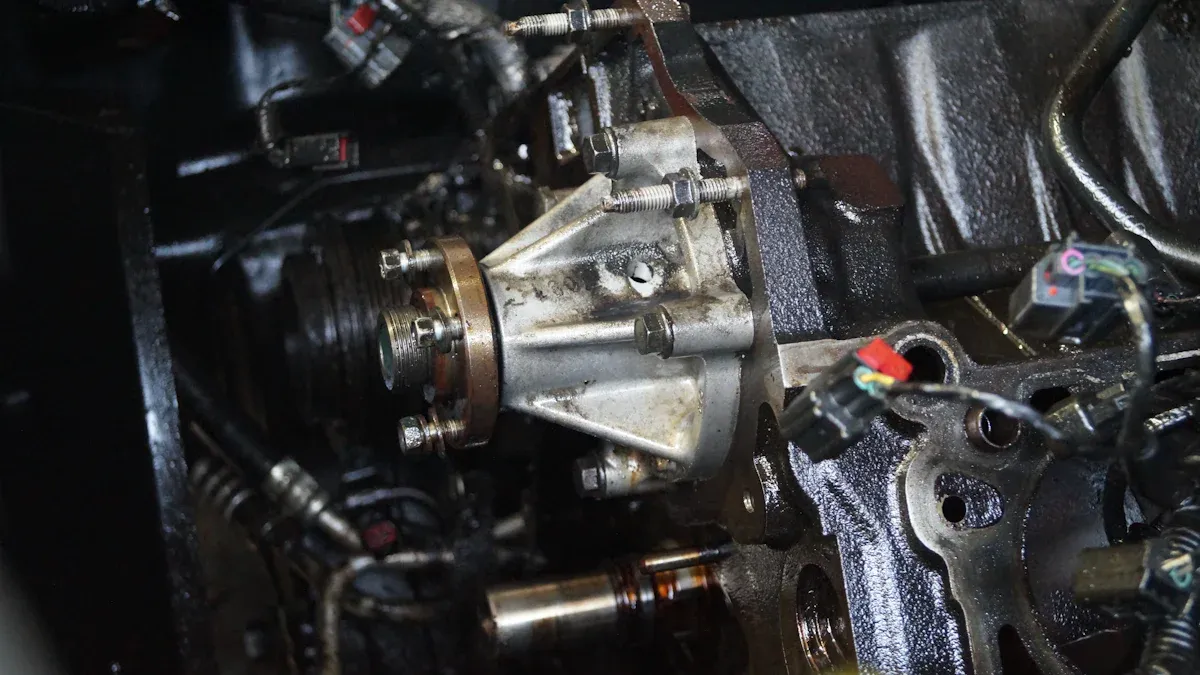
The car water pump works like the main heart of your vehicle's cooling system. This key part continuously pushes liquid coolant through small passages inside the engine block. As fluid moves through these paths, the liquid absorbs extra engine heat right away. The coolant then carries all that heat directly to the radiator. A working engine water pump keeps your vehicle running safely at a coolant temperature between 195°F and 220°F (85°C to 105°C). Keeping this steady temperature improves gas mileage, lowers pollution, and prevents heavy engine wear.
Without good cooling, heat builds up very fast while driving every day. Poor fluid movement destroys critical engine parts quickly.
High engine temperatures cause rapid part damage and lower engine power because metal pieces swell up and rub together much harder inside.
Learning how the water pump protects your engine helps you prevent total mechanical failure. When fluid stops flowing, metal parts quickly swell up from extreme heat stress. Bent cylinder heads, blown head gaskets, and cracked engine blocks happen right after temperatures shoot up.
You can easily learn how this pump functions by checking its main internal parts. Engineers craft these strong assemblies using durable materials so they can handle non-stop spinning and harsh chemicals.
Impeller: Spinning metal blades throw liquid outward into the main engine passages.
Spindle and bearing: A central shaft carries belt motion to the impeller while strong bearings support heavy rotation.
Seals: Tough mechanical seals built from carbon, ceramic, or rubber stop fluid leaks near the turning shaft.
Exterior housing: A heavy metal cover protects internal pieces and bolts straight onto the engine block with tight gaskets.
Your engine cooling system depends on every single one of these basic parts. The drive belt turns the pulley, which spins the internal spindle shaft. This turning motion spins the impeller blades at high speeds. Centrifugal force pushes fresh coolant out into the main engine passages. Reliable mechanical seals keep tight fluid pressure around the turning shaft. Meanwhile, the outer housing holds pressurized fluid under hot driving conditions. Every part must work together smoothly to keep your car from burning up.
How Does a Water Pump Work?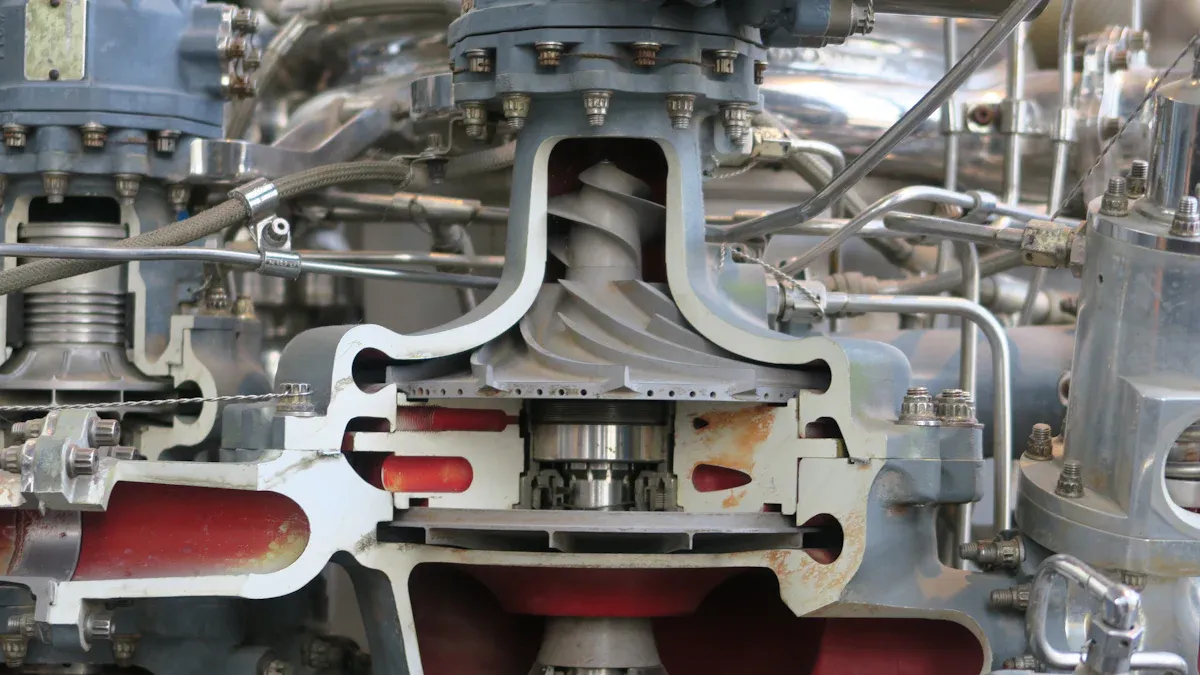
You may ask how does a water pump work while driving your car. The system uses spinning forces to push coolant through hot engine parts. Fast-turning impeller blades send liquid flying outward to speed up the fluid. This movement energy turns into strong pressure that pushes coolant through dark pathways inside your car water pump housing. A rubber belt connects mechanical pumps right to the main engine shaft. Driving faster spins the impeller quicker, which raises the fluid flow rate to safeguard hot metal pieces.
The impeller keeps spinning to maintain steady liquid movement through the system. When engine speeds rise, faster turning action adds force to the fluid mixture. This smooth flow keeps the cooling system balanced during hard driving.
Coolant, driven by a water pump, is pushed through the cylinder block. The liquid soaks up engine heat while traveling inside these tiny paths. After leaving the hot engine, this warm fluid enters the radiator, where incoming air through the front grill cools it down. The water pump sends the fluid back to the cylinder block, heater core, and cylinder head. Finally, the liquid goes into the radiator to cool down once more.
Car makers power this main engine water pump using two different options. Standard mechanical pumps rely on serpentine belts or timing belts attached to the spinning engine. Modern electric pumps use small power motors to circulate fluid on their own.
|
Aspect |
Mechanical Belt-Driven |
Electric |
|---|---|---|
|
Energy Efficiency |
Lower; runs constantly at engine speed even without cooling needs, wasting power. |
Higher; turns more power into liquid flow and operates only when required. |
|
Fuel Consumption |
Higher because of continuous engine drag and non-stop running time. |
Lower since demand-based running cuts out unneeded engine strain. |
|
Flow Control |
Tied to engine RPM and cannot change speed on its own. |
Precise, changing fluid speed based on actual engine heat needs. |
|
Engine Load |
Adds constant extra strain through the spinning drive belt. |
Cuts down engine strain by running on separate electric power. |
|
Emissions |
Higher as a result of using extra gasoline while driving. |
Lower as a result of using less gasoline overall. |
Mechanical designs put constant extra work onto your engine belt system. Electric models cut down gas pollution because computers control power use based on exact heat levels.
You can trace the full loop by watching fluid travel through the cooling system. The inside impeller pulls coolant from the lower radiator hose at the bottom. Strong spinning motion blasts the liquid straight into hot engine passages.
The impeller pulls liquid from the lower hose and pushes fluid into the block.
Coolant soaks up heat from metal cylinder walls while moving through inner paths.
Warm liquid moves past the heat valve toward the top radiator hose connection.
Outside air cools warm fluid as it flows down thin radiator pipes inside.
Clean fluid goes back to the pump inlet to circulate coolant non-stop.
A heat valve works with the pump to manage fluid movement inside the vehicle system.
|
Phase |
Thermostat State |
Pump Action |
Effect |
|---|---|---|---|
|
Cold Start |
Closed |
Pushes coolant through the engine only |
Engine warms up fast |
|
Warm Engine |
Opens |
Sends coolant through the front radiator |
Heat leaves the coolant |
|
Regulation |
Opens/closes as needed |
Keeps pushing fluid |
Engine heat stays safe |
Learning how does a water pump work helps you notice cooling problems before high heat ruins your engine.
Symptoms of a Failing Engine Water PumpYou can find signs of a bad water pump by looking under your car right after parking. The inside seals wear out over time and let fluid escape through the small weep hole. You might see bright green, orange, or pink liquid pooling on the ground under your engine. Losing this fluid lowers cooling power and creates dangerous air pockets inside the engine channels. Checking your parking spot often helps you notice small drips before big leaks begin.
Ignoring small fluid spots soon leads to major engine trouble throughout your entire car. Dry seals break down faster without good fluid, which speeds up shaft wear inside the part. You should schedule a water pump replacement right away when drops keep appearing under your engine. Ongoing fluid leaks stop steady heat control and put delicate engine parts at risk. Running out of fluid causes fast metal swelling and severe engine damage.
A broken impeller or shaft inside your car water pump causes bad engine overheating while driving normally. Your dashboard gauge will jump fast or shift around as fluid stops moving smoothly through the engine. Steam rising from under the hood means boiling liquid and high heat stress inside your engine. You must pull over safely when hot steam escapes from the front grill to avoid total engine failure.
"A couple days ago, I thought I heard the characteristic rock in a tin can noise on a cold startup... This morning, there was a loud and repeated knocking noise. Increased with RPMs..."
Worn inside bearings make clear sounds that alert you to failing parts in your car water pump. You may hear high squealing from early pulley wear, chirping from loose belts, or grinding from heavy friction. Removing the main engine belt stops this noise, which proves the pump is failing before total breakdown ruins the cooling system completely.
Guide to Water Pump ReplacementVehicle age changes component durability over time. On older models, you usually need a water pump replacement between 60,000 and 100,000 miles. Modern cars feature improved parts, so an engine water pump often lasts more than 100,000 miles. You should check your vehicle manual for exact service intervals.
Older models: replacement typically needed between 60,000 and 100,000 miles.
Modern cars: water pump often lasts more than 100,000 miles.
You save money on labor costs by combining belt service with a new pump. Mechanics perform 80-90% of the teardown labor during timing belt work. Adding a pump at that moment costs only $80–$200 in extra parts. A separate water pump replacement later requires $500–$900 in labor expenses because technicians must strip down the belt area twice. Furthermore, a seized pump locks up and shears belt teeth, causing total engine failure.
Repair bills depend heavily on your vehicle model and part quality. The total car water pump installation bill averages about $900 for typical passenger vehicles.
|
Type |
Total Cost |
Parts Cost |
Labor Cost |
|---|---|---|---|
|
Car Water Pump |
~$900 |
$200 – $400 |
~$600 (two-thirds of total) |
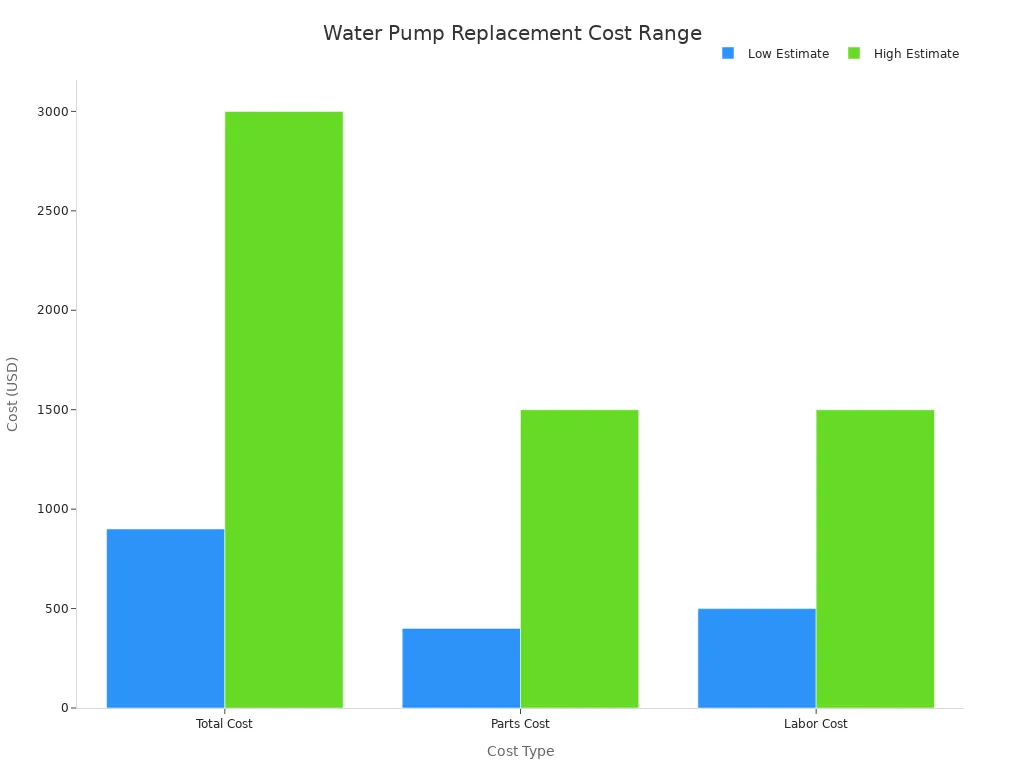
Labor makes up two-thirds of the overall repair expense. Technicians spend 2 to 4 hours removing covers and bleeding air from the cooling system.
A standalone water pump replacement takes significant labor time because technicians must clear internal engine components to access the unit.
Item
Budget Range
Mid-Range
Premium
Water pump assembly
$40–$120
$80–$180
$150–$300
Gaskets, seals, coolant
$25–$60
$40–$100
$75–$150
Labor (2–4 hours)
$200–$400
$300–$550
$400–$700
Total estimated cost
$265–$580
$420–$830
$625–$1,150
Planning your water pump replacement early protects your engine and avoids expensive roadside breakdowns.
Your car water pump protects heavy internal engine parts by keeping fluid moving at a balanced speed. Constant liquid flow soaks up excess heat to keep engine temperatures safe. Good fluid movement improves cooling work and protects metal parts from bad damage.
You should react quickly when you spot clear warning signs. Stop driving safely if you notice bright fluid spots under your car, steam near the hood, or hot dashboard readings. Skipping these early alerts leads to fast engine damage and pricey repairs.
FAQPlan a water pump replacement during regular maintenance visits. Checking your cooling system often keeps your engine safe while avoiding costly roadside breakdowns.
You usually change a water pump replacement every 60,000 to 100,000 miles in older cars. Newer models can go past 100,000 miles. Mechanics advise installing a new pump while replacing your timing belt to save cash on work fees.
You can catch early signs of a bad water pump when bright liquid pools under your vehicle. Your heat gauge will jump quickly into red zones. You may also hear harsh scraping sounds or spot white steam under the hood.
You must turn off the motor right away if your engine water pump breaks down. Operating your vehicle with no fluid movement builds up massive heat. High heat quickly warps tough metal parts and breaks cylinder heads, destroying your engine completely.
Your car produces huge amounts of heat whenever you drive it around town. A good cooling system manages internal heat levels to keep fluid temperatures near 195°F to 220°F. Keeping temperatures stable stops metal parts from expanding and protects soft rubber seals.
Coolant travels through hidden pathways around hot metal cylinder walls inside your motor. This liquid pulls extra heat away from hot engine surfaces. The internal impeller blasts this hot fluid straight into the front radiator, where outside air chills it down constantly.
Please leave your requirements and contact information, and we will send you the quotation information as soon as possible.