Date: 2026.06.23 Click: 18
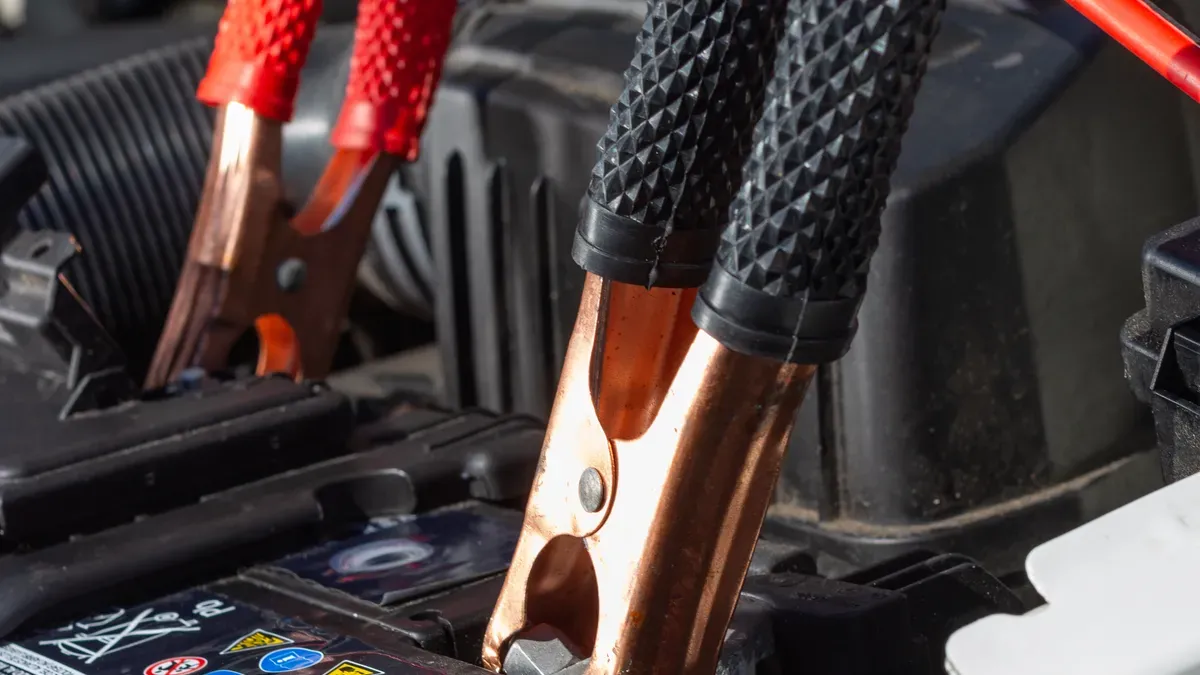
You need to pick the right battery cable for your car. This helps keep your electrical system safe and working well. Always look at your owner's manual for the correct details. If you use the wrong cable, you can have problems. Your engine may crank slowly. Lights might flicker. The fuel system could stop working right. Check the table below for common risks:
|
Risk Type |
Description |
|---|---|
|
Voltage Drop |
Can make headlights and fuel pumps work less well. |
|
Safety Hazards |
May mess up important systems and raise fire danger. |
|
Increased Heat |
Too much resistance can hurt insulation and parts. |
Look at your vehicle’s owner’s manual for the right battery cable size and type. This helps keep your car safe and working well.
Think about how much power your vehicle needs. If the cable is too small, it can get hot and cause problems.
Pick the best insulation material for your battery cables. Choose based on how and where you drive. This makes the cables last longer and keeps you safe.
Use the correct way to connect battery cables. Clean the terminals first. Make sure the connections are tight. This stops electrical issues.
If you do not know which battery cable to pick or how to install it, ask a mechanic for help.
First, check your vehicle’s manufacturer specs. These tell you the right battery cable size and type. Look in your owner’s manual or service guide for this info. If you follow these steps, you will get the right cable for your car:
Find out how much current your system uses.
Measure how long the cable needs to be. Longer cables need thicker wires to stop voltage drop.
Use a battery cable size chart. Match your current and cable length to the right wire gauge.
Tip: The right size cable helps your car start and keeps all electrical parts working.
You must know how much current your car uses. This helps you pick a battery cable that can handle it. If the cable is too small, it can get hot and cause trouble. The table below shows what you should check when picking a cable:
|
Variable |
Description |
|---|---|
|
A |
Cross-sectional area of the wire (in square meters, m²) |
|
D |
One-way cable length (in meters, m) |
|
I |
Current through the wire (in amperes, A) |
|
ρ |
Resistivity of the conductor material (in ohm meters, Ω·m) |
|
V |
Voltage drop across the wire (in volts, V) |
Ask a mechanic for help if you do not know how to measure these things. Always make sure your battery cable fits your car’s amperage needs.
Think about where and how you use your car. Hot or cold weather, chemicals, and water can change how your battery cable works. The table below shows how different things can affect your cable:
|
Environmental Factor |
Effect on Battery Performance |
|---|---|
|
Temperature Extremes |
Changes chemical reactions, causing power loss and less range. |
|
High Temperatures |
Can cause thermal runaway and lithium plating, hurting battery performance. |
|
Cold Conditions |
Slows chemical reactions, so you get less power and longer charging times. |
|
Contaminants |
Can cause electrical shorts and thermal runaway, which can damage the battery. |
|
Chemical Exposure |
Makes the battery more likely to catch fire and can cause corrosion. |
You also need to think about how you use your car. Different cars need different connectors and cables. Here is a quick guide:
|
Vehicle Type |
Connector Requirements |
|---|---|
|
Passenger Vehicles |
Ring terminals and quick-disconnect connectors for safety. |
|
Commercial Vehicles |
Heavy-duty lugs and clamps for higher current loads. |
|
Electric and Hybrid Vehicles |
Anderson power connectors for high-voltage systems. |
|
Heavy-Duty Vehicles |
Strong lugs and clamps for tough conditions. |
|
Marine and Specialty Vehicles |
Corrosion-resistant materials for wet places. |
If you drive in hard conditions or use your car for work, you may need a stronger battery cable. Always pick a cable that fits your driving needs and where you drive.
Battery Cable Size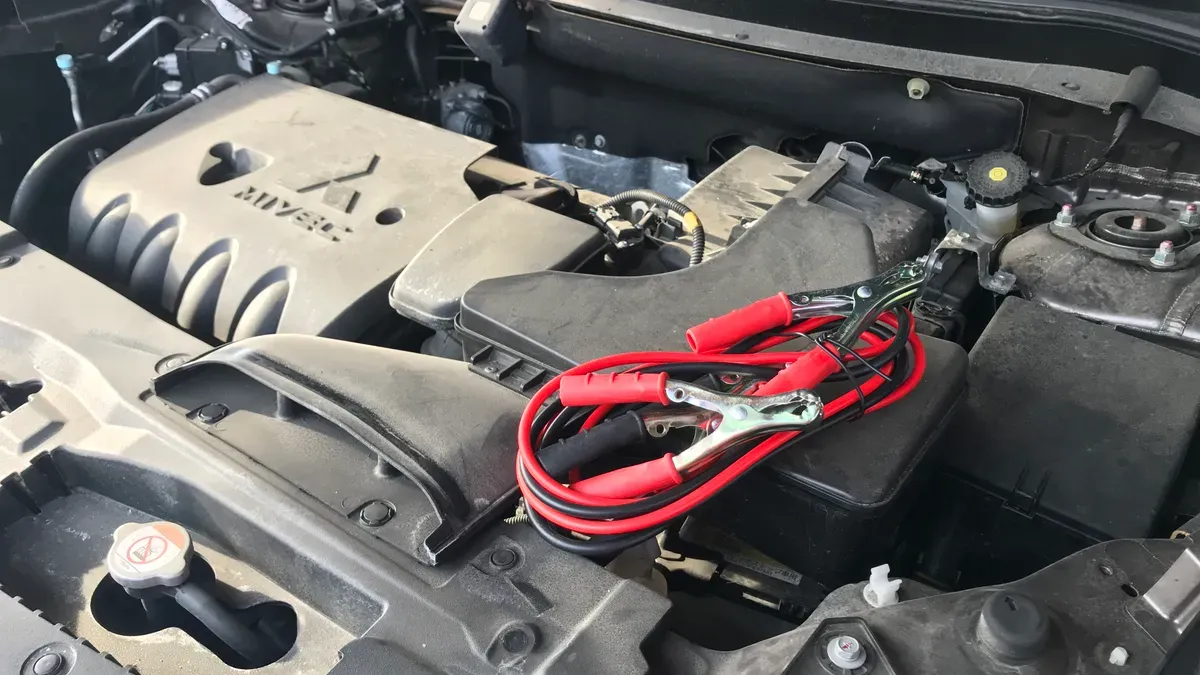
Choosing the right battery cable size is important for your vehicle’s safety and performance. You need to know about gauge ratings, how size affects amperage and voltage drop, and which sizes are common in cars and trucks.
Gauge ratings tell you how thick a battery cable is. The American Wire Gauge (AWG) system uses numbers to show the thickness. A lower AWG number means a thicker cable. Thicker cables can carry more electricity. Thinner cables have higher numbers and carry less electricity.
Here is a table that shows common gauge sizes for battery cables:
|
AWG Size |
Insulation Thickness |
Diameter |
Approximate Weight |
|---|---|---|---|
|
6 |
65 mils |
0.333 inch |
116 lbs / 1000′ |
|
4 |
65 mils |
0.360 inch |
158 lbs / 1000′ |
|
2 |
65 mils |
0.440 inch |
244 lbs / 1000′ |
|
1 |
78 mils |
0.480 inch |
304 lbs / 1000′ |
|
1/0 |
65 mils |
0.520 inch |
370 lbs / 1000′ |
|
2/0 |
65 mils |
0.570 inch |
458 lbs / 1000′ |
|
3/0 |
78 mils |
0.660 inch |
586 lbs / 1000′ |
|
4/0 |
78 mils |
0.740 inch |
779 lbs / 1000′ |
You can also see how the weight goes up as the cable gets thicker:
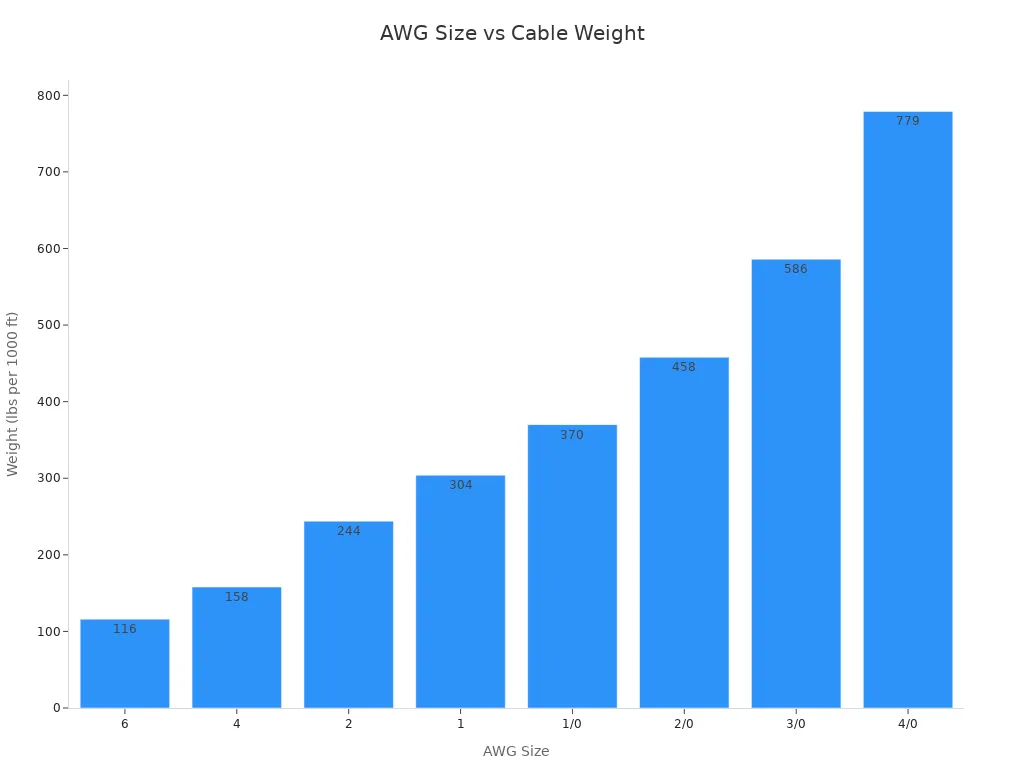
Tip: Always check your owner’s manual for the right gauge rating before you buy a new battery cable.
The size of your battery cable affects how much current it can carry and how much voltage drops as electricity moves through it. If you pick a cable that is too thin, it can get hot and lose power. If you pick a cable that is too thick, it may be hard to install and cost more.
Thicker cables (lower AWG numbers) have less resistance. They carry more current and lose less voltage.
Thinner cables (higher AWG numbers) have more resistance. They can overheat and cause voltage drops.
Longer cables need to be thicker. The longer the cable, the more voltage drops. You need a thicker cable to keep your car running well.
Note: Always measure the distance from your battery to the starter or main fuse box. Use a battery cable size chart to match the right gauge to your car’s needs.
Most cars and trucks use battery cables between 6-gauge and 1/0-gauge. The right size depends on your vehicle’s engine size, how much current it uses, and how long the cable needs to be.
Here is a quick guide:
Small cars and motorcycles often use 6-gauge or 4-gauge cables.
Most passenger vehicles use 4-gauge or 2-gauge cables.
Trucks, SUVs, and vehicles with big engines may need 2-gauge, 1-gauge, or even 1/0-gauge cables.
Heavy-duty vehicles and special equipment sometimes use 2/0-gauge or larger.
You should always match the battery cable size to your vehicle’s needs. This helps prevent voltage drop, keeps your car starting strong, and protects your electrical system.
Cable MaterialReminder: If you are not sure which size to pick, ask a mechanic or check your vehicle’s manual.
You can pick copper or aluminum for your battery cables. Copper is used a lot because it moves electricity well and lasts longer. Aluminum is lighter and costs less money. Both have good and bad points.
Here is a table that shows how much they cost and how long they last:
|
Cost Factor |
Copper |
Aluminum |
Notes |
|---|---|---|---|
|
Raw material per pound |
$4.00-5.00 |
$1.20-1.50 |
Aluminum is about 70% cheaper |
|
Wire cost per 1000 ft (30A) |
$200-300 (10 AWG) |
$100-150 (8 AWG) |
Aluminum wire is still cheaper |
|
Total installed cost |
Baseline |
30-50% lower |
Aluminum saves money for long runs |
Copper cables last longer than aluminum ones. They can handle heat and shaking better. Aluminum cables work well if you put them in the right way. You must make sure the connections are tight and safe.
Tip: Copper is heavier and costs more, but it works better in most cars.
It is important to know the good and bad things about each material. Copper cables give strong and steady connections. They do not get damaged easily by heat or shaking. Aluminum cables are lighter and cost less, but you must install them carefully.
Copper Pros:
Strong and lasts a long time
Handles tough places well
Connects power better
Copper Cons:
Costs more money
Weighs more
Aluminum Pros:
Costs less money
Weighs less
Aluminum Cons:
Needs to be bigger for the same power
May not work as well if not installed right
Copper is best where there is heat or shaking. Aluminum is okay for easier jobs. Experts say copper is better if you want it to last a long time.
Cable Length & InsulationYou must measure your battery cable length with care. First, find the path from your battery to the starter or fuse box. Use a tape measure that bends easily. Follow the route where the cable will go. Add a few extra inches to your measurement. This extra length helps you avoid sharp bends. It also makes putting in the cable easier. If you cut the cable too short, you might have trouble connecting it. You could also pull too hard on the terminals. Always check your measurement again before you buy or cut the cable.
Tip: If your cable is too long, you can lose voltage. If it is too short, it may not reach your connections.
The insulation on your battery cable keeps it safe from heat and damage. It also protects it from chemicals. You need to pick the right insulation for your car. Here are the most common types:
PVC: Cheap and protects well from chemicals.
Cross-linked Polyethylene (XLPE): Handles heat and lasts a long time.
Rubber: Flexible and stands up to wear.
Silicone: Works well in places that get very hot.
Silicone rubber insulation is strong and safe. It can handle very cold and very hot temperatures. It works from -60°C to +250°C. This makes it good for regular cars and electric vehicles. Silicone stays flexible, so you can run cables through tight spots. It also stops fire from spreading if there is a fire.
If you drive in bad weather or your cables are outside, you need strong insulation. Some materials are better for weather resistance. The table below shows the best choices:
|
Insulation Material |
Key Features |
|---|---|
|
XLPE |
Handles heat, chemicals, and protects well. Great for outdoor use. |
|
EPR/Neoprene |
Strong against heat, moisture, oil, and damage from the environment. |
|
Halogen-free flame retardant |
Good for the planet and works for battery connections. |
Pick insulation that fits your weather and how you drive. This helps your battery cables last longer. It also keeps your car safe.
Safety Tips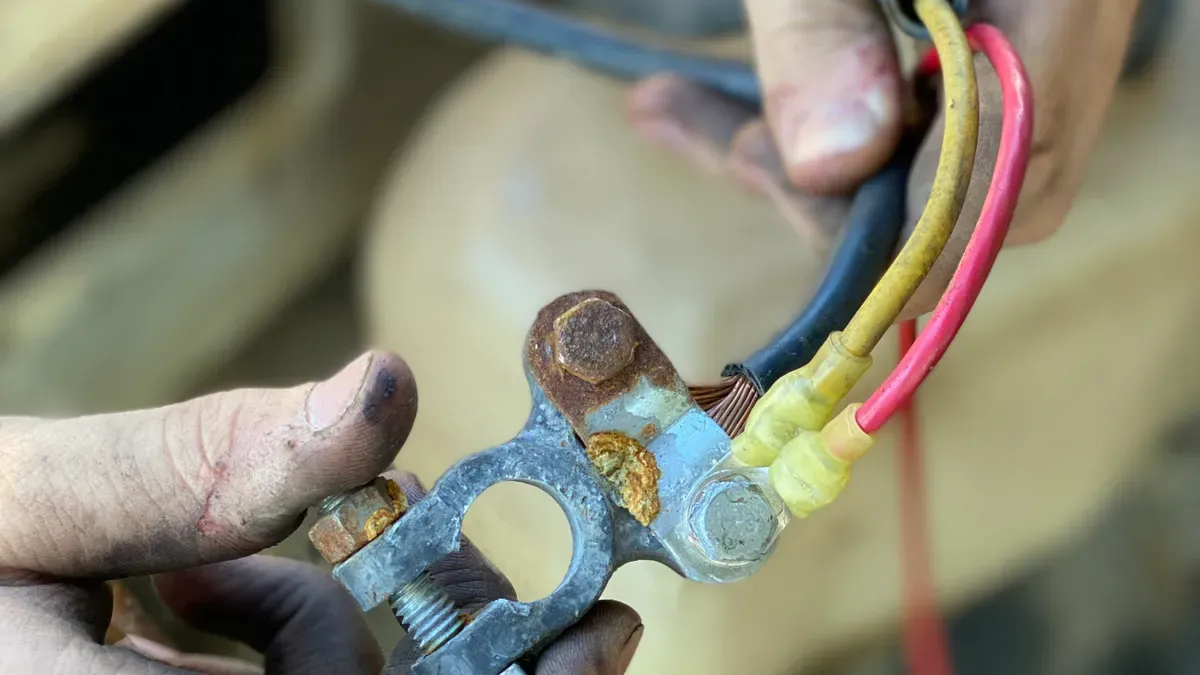
It is important to make sure your battery cable connections are safe. Clean the terminals before you put on the cables. Use the right tools for the job. Make sure the cables are tight and do not move around. If cables are loose, they can spark or your car may not start.
Doing regular checks and installing cables the right way helps your car’s electrical system work well. This keeps your car running smoothly.
Here are steps for safe battery cable connections:
Get all the tools you need before you start.
Make sure the connections are clean and have no rust.
Fasten the cables tightly so they do not move or get damaged.
Never let the positive and negative terminals touch each other. This stops short-circuits.
Look in your car’s manual to know how much power you need.
Do not use different kinds or sizes of batteries together.
When you take off the battery, cover the positive terminal. Wear rubber gloves or boots to protect yourself.
People sometimes make mistakes when putting in battery cables. You can avoid problems if you know what to look out for.
If you do not clean the battery tray, it can drain your battery.
If you forget to reset the Battery Management System, your battery can get too much charge and get damaged.
If you connect cables the wrong way, the terminals can get loose and cause electrical issues.
Check your work before you finish. Make sure everything is tight and clean.
Sometimes you need a professional to help you. Watch for signs that mean you should get expert help.
If many electrical parts stop working at once.
If you smell something burning near the wires.
If your battery keeps failing even after you put it in right.
If you have a hybrid or high-voltage system that needs special tools.
If you see any of these things, call a mechanic. This keeps your car safe and protects you.
You can pick the right Battery Cable by looking at your car’s needs. Choose the right size and best material. Measure the length carefully. Always think about safety and check your work twice. If you are not sure, ask a mechanic for help. Here is what you might pay:
|
Item |
Budget Range |
Mid-Range |
Premium |
|---|---|---|---|
|
Battery cable (positive or negative) |
$15–$40 |
$40–$80 |
$80–$150 |
|
Labor (removal and installation) |
$40–$80 |
$80–$150 |
$150–$250 |
|
Terminals, connectors, or hardware (if needed) |
$5–$15 |
$15–$35 |
$35–$75 |
Follow each step to make sure your installation is safe and works well.
FAQIf you use the wrong size, your car may not start. You could see dim lights or even smell burning. The wrong cable can overheat and cause damage. Always match the cable size to your car’s needs.
You should check for cracks, corrosion, or frayed wires. If your car has trouble starting or you see green or white powder on the cables, it is time to replace them.
You can use aluminum cables, but you must pick a larger size. Aluminum does not carry electricity as well as copper. Always make sure the connections are tight and safe.
Yes, you need cables with thick insulation for cold weather. Cold can make cables stiff and brittle. Look for cables marked as “cold weather” or “flexible” for best results.
Please leave your requirements and contact information, and we will send you the quotation information as soon as possible.