Date: 2026.06.22 Click: 19

You may see your car is hard to start. The engine might run rough or shake. Your car could use more gas than normal. These things can mean the Camshaft Position Sensor is bad. Fixing it fast can keep your engine safe. Watch for these problems:
Hard starting or no-start
Poor performance or misfires
Lower fuel efficiency
Check engine light
Look for signs of a bad camshaft position sensor, like trouble starting, engine stopping, and using too much gas. Finding the problem early can save you time and money.
Use an OBD-II scanner to look for error codes about the camshaft position sensor. This tool helps you find problems fast and correctly.
Check the sensor and its wires by looking at them. Search for cracks, rust, or loose wires to find problems before they get worse.
Symptoms of Camshaft Position Sensor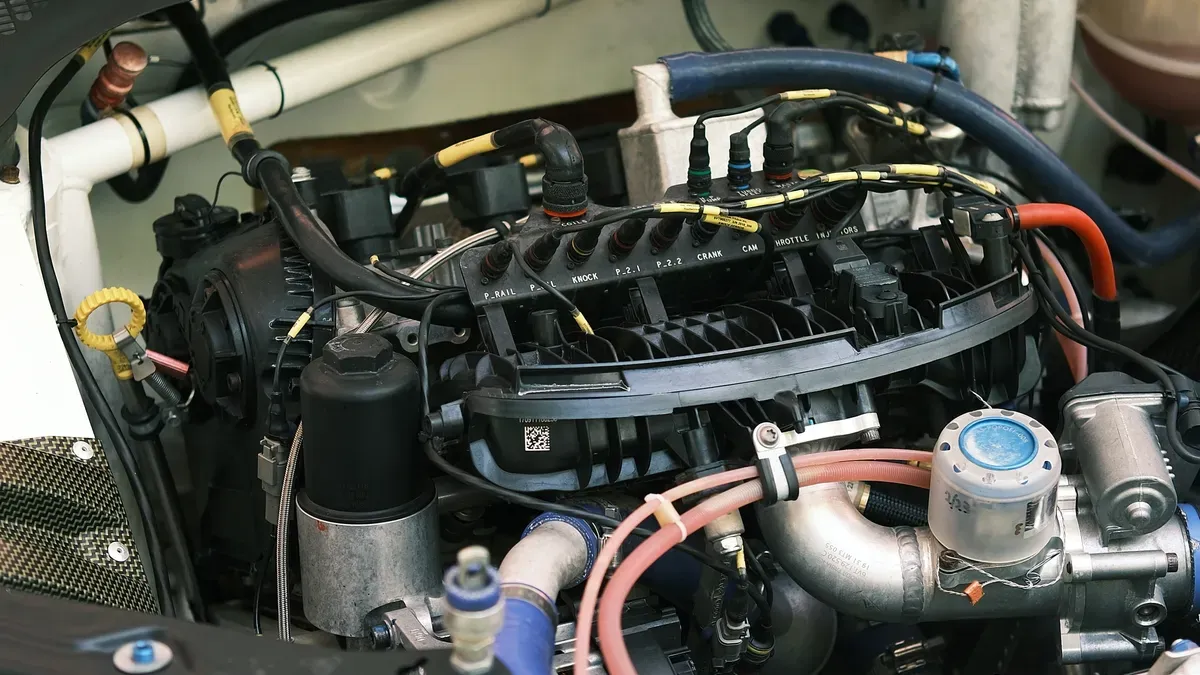
When your car acts up, you want to know why. Spotting the common symptoms of bad camshaft position sensor problems can save you time and money. Let’s break down what you might notice.
You might feel your car jerk or even stall while driving. Sometimes, the engine misfires or shakes. These are common symptoms of bad camshaft position sensor issues. The sensor helps your engine fire at the right time. When it fails, your car can stutter, stall, or run rough. You may see a code like P1345 if you scan your car. This code points to problems with the camshaft position sensor circuit. If you notice these symptoms, you should check the sensor soon.
Tip: If your car stalls at a stoplight or misfires when you press the gas, the camshaft position sensor could be the cause.
A check engine light often comes on when the sensor goes bad. You may also have trouble starting your car. Sometimes, the engine cranks but does not start. These are classic symptoms of a bad camshaft sensor. Most cars made after 2020 will show a warning light or even refuse to start if the sensor fails. If you see the check engine light and your car is hard to start, don’t ignore it.
A bad camshaft position sensor can make your car feel weak. You might notice poor acceleration, rough idling, or bad fuel economy. The engine control unit needs good data from the sensor to run well. If the sensor sends wrong signals, your car uses more gas and runs poorly. You may also notice the car shifts gears at the wrong time. These common symptoms of bad camshaft position sensor problems can hurt your wallet and your engine.
Note: Extreme heat or cold can make these problems worse, especially in older cars.
If you spot these symptoms of a bad camshaft sensor, you should check the sensor before bigger problems start.
Diagnosing Camshaft Position Sensor
You can check the camshaft position sensor at home. You only need a few tools. Let’s go through each step together.
Use your eyes and hands first. Many camshaft position sensor problems are easy to see. Look for these signs:
Cracks or rust on the sensor
Oil around the sensor
Loose or broken connectors
Wires that look damaged
You may also see rust or loose wires. These problems can make the sensor send wrong signals. If you find any issues, fix them before you do more tests.
Tip: Always check wires and connectors first. Many people forget this and miss an easy fix.
Next, use an OBD-II scanner. Plug it into your car’s port. Turn the key to “on,” but don’t start the engine. The scanner will show error codes.
Common codes for camshaft position sensor problems are:
P000A – “A” Camshaft Position Slow Response
P000B – “B” Camshaft Position Slow Response
P0010 – “A” Camshaft Position Actuator Circuit/Open
P0011 – “A” Camshaft Position – Timing Over-Advanced or System
P0340 – Camshaft Position Sensor “A” Circuit
P0341 – Camshaft Position Sensor “A” Circuit Range/Performance
P0342 – Camshaft Position Sensor “A” Circuit Low
P0343 – Camshaft Position Sensor “A” Circuit High
P0365 – Camshaft Position Sensor “B” Circuit
P0366 – Camshaft Position Sensor “B” Circuit Range/Performance
If you see one of these codes, the sensor may be bad. Professional scanners give clear readings and explain the codes. They work well for most problems. Sometimes, you need special tools like oscilloscopes for hidden issues.
Note: OBD-II scanners find most sensor problems. For hard-to-find issues, a mechanic may use an oscilloscope.
You can test the camshaft position sensor with an ohm meter. This tool checks resistance inside the sensor. Here’s how to do it:
|
Vehicle |
Minimum Resistance (ohms) |
Maximum Resistance (ohms) |
|---|---|---|
|
Edge, MKX |
586 |
2,033 |
Follow these steps:
Make sure your car battery is charged.
Get a 10mm socket and a multimeter.
Find the camshaft position sensor behind the cylinder head.
Remove the bolt holding the sensor.
Unplug the connector and wiring harness.
Set your multimeter to measure resistance.
Put the probes on the sensor pins (try 1 and 2, 1 and 3, 2 and 3).
Check the numbers. If you see 0 or nothing, the sensor is bad.
Compare your numbers to the table above. If your numbers are not in the range, the sensor is faulty.
Tip: Always check your meter settings and connections. A small mistake can give you wrong results.
You should be sure before you replace the sensor. Mechanics use a checklist to confirm the problem:
Look for damage, rust, or loose connectors.
Make sure the sensor gets power from the computer.
Check if the sensor sends a signal when the engine runs.
Measure resistance with a multimeter.
Use an oscilloscope for a closer look (if you have one).
If you finish these steps and still see problems, the camshaft position sensor is likely bad. Remember, other engine parts can cause similar symptoms. Always check wires and connectors to avoid mistakes.
Warning: If you misdiagnose the sensor, your engine may stall, run rough, use more gas, or damage expensive parts like the catalytic converter.
If you follow these steps, you can find a bad camshaft position sensor before it causes bigger problems. Now you know how to test and confirm if the sensor needs to be replaced.
You can spot a bad camshaft position sensor by checking symptoms, scanning for codes, and testing with a meter. If you need a new sensor, expect to pay $150 to $400 in 2026. Early fixes help your engine last longer:
Prevent rough idling and misfires
Avoid costly repairs
|
Sensor Type |
Warranty Duration |
Description |
|---|---|---|
|
Budget-tier |
1 year |
Good for older cars |
|
Mid-range |
2–3 years |
Fits most vehicles |
|
Premium-tier |
3–5 years |
Best for high-performance cars |
Regular checks keep your car running strong. You’ve got this!
FAQYou can finish the job in 30 to 60 minutes. Most people can do it with basic tools.
You should not drive far. Your car may stall or run rough. Fix the sensor soon to avoid bigger problems.
No, not always. Sometimes, you will see symptoms before the light comes on. Watch for rough idling or hard starts.
Please leave your requirements and contact information, and we will send you the quotation information as soon as possible.