Date: 2026.05.13 Click: 1
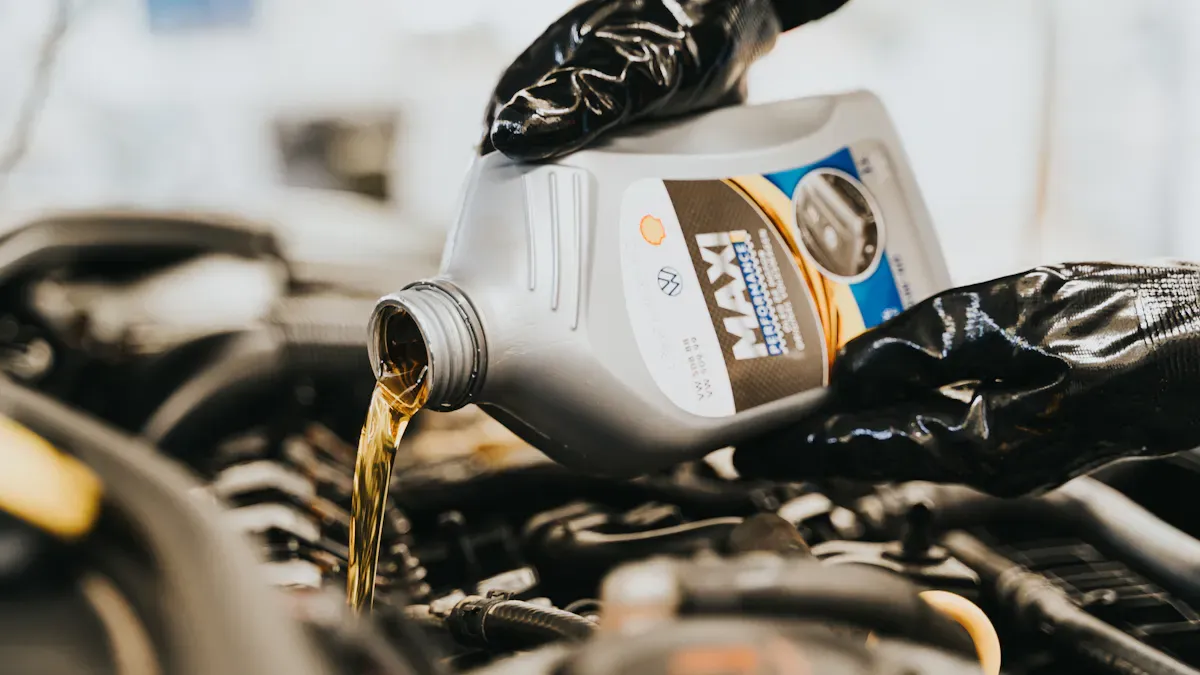
You rely on brake fluid every time you want to stop your car. When you press the brake pedal, this special liquid sends your force to the brakes, making braking smooth and safe. Without it, your car would not stop when you need it to. Brake fluid helps you stay in control on the road.
Key TakeawaysBrake fluid is very important for safe driving. It moves the force from your foot to the brakes. This helps your car stop without problems.
You should check and change brake fluid every 2 or 3 years. This stops water from getting in, which can make brakes work badly. It can also cause brakes to fail.
Pick the correct brake fluid for your car. Using the right fluid keeps your brakes working well and keeps you safe.
Look for signs of bad brake fluid, like a soft pedal or fluid that looks dirty. These signs mean you need to change the fluid soon.
Keep brake fluid clean and dry. This helps your brakes work well and stops expensive repairs.
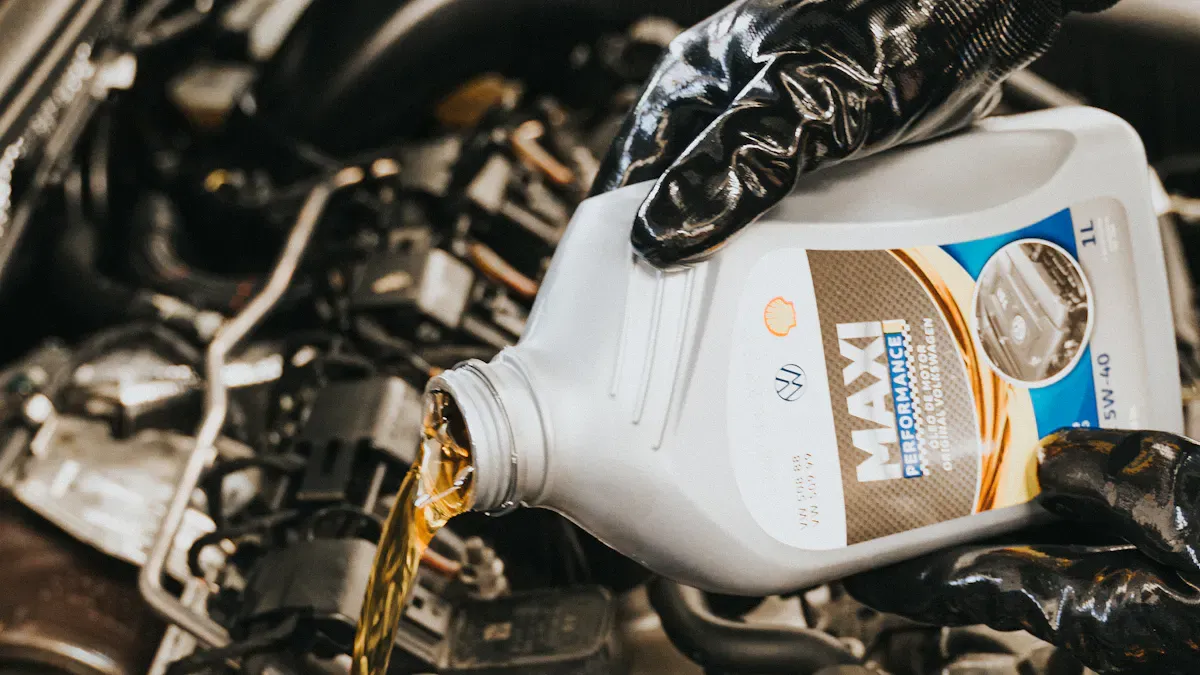
You use brake fluid every time you press the brake pedal. This special liquid plays a key role in your car’s braking system. Brake fluid moves force from your foot to the brakes, helping you stop safely. Without it, your car would not slow down or stop when you need it most.
Brake fluid works inside a hydraulic system. When you step on the brake pedal, you start a chain reaction. Here’s how the process works:
|
Step |
Description |
|---|---|
|
1 |
You press the brake pedal with your foot. |
|
2 |
The pedal pushes a piston inside the master cylinder. |
|
3 |
The master cylinder pressurizes the brake fluid. |
|
4 |
Pressurized brake fluid travels through brake lines to the wheels. |
|
5 |
The pressure moves pistons at each wheel, pushing brake pads against the rotors or drums. |
|
6 |
Friction between the pads and rotors slows or stops the wheels. |
Brake fluid makes this process possible because it does not compress under pressure. This means all the force you apply to the pedal goes straight to the brakes. You get quick and reliable stopping power every time.
Modern brake fluid contains different chemicals to help it work well in many conditions. Here are some common components:
|
Component |
Description |
|---|---|
|
Polyglycol ether |
Main ingredient in most brake fluids |
|
Boric acid ester |
Improves performance and stability |
|
Polyglycols |
Adds special properties for better function |
|
Silicone-based fluids |
Used in some special brake systems |
You will find several types of brake fluid in today’s vehicles:
DOT 3: Works well for most street cars and absorbs water from the air.
DOT 4: Handles higher temperatures, good for heavy braking.
DOT 5: Made from silicone, does not absorb water, used in classic or racing cars.
DOT 5.1: High boiling point, fits modern brake systems.
Each type of brake fluid has its own strengths. You should always use the type recommended for your car.
Brake fluid has two important properties: it is non-compressible and hygroscopic.
Non-compressible: Brake fluid does not squeeze down when you apply pressure. This lets the braking system send your force directly to the brakes. You get strong and steady braking every time you press the pedal.
Hygroscopic: Most brake fluids absorb moisture from the air. Over time, water gets into the brake fluid. Fresh brake fluid has less than 2% water. After two years, this can rise to 3-4% or more.
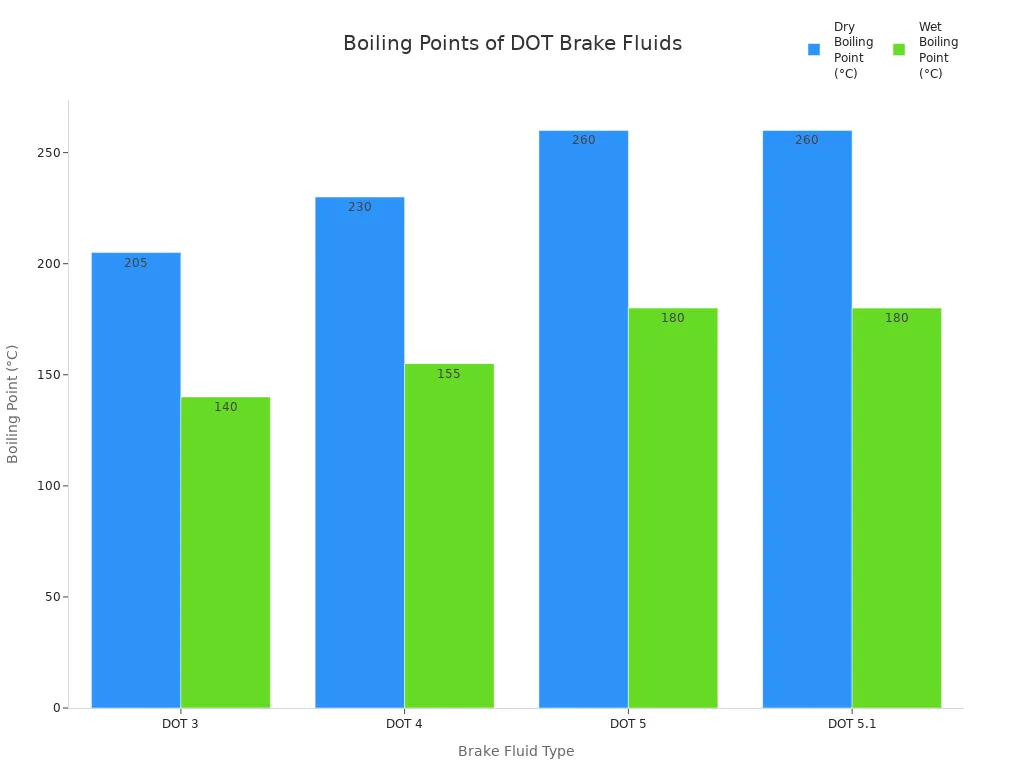
Tip: Water in brake fluid lowers its boiling point. For example, fresh DOT 3 brake fluid boils at about 401°F (205°C). With 3% water, the boiling point drops to 284°F (140°C). If the brake fluid boils, it can form gas bubbles. Gas compresses easily, so you lose braking power and may feel a soft or spongy pedal.
You need to keep brake fluid clean and dry for the best performance. If you let water build up, your brakes may not work well, especially during hard stops or in hot weather.
Brake fluid is essential for your safety. It connects your foot to the brakes and helps you stop your car quickly and smoothly. By understanding how brake fluid works and why it matters, you can keep your braking system in top shape.
How Brake Fluid Works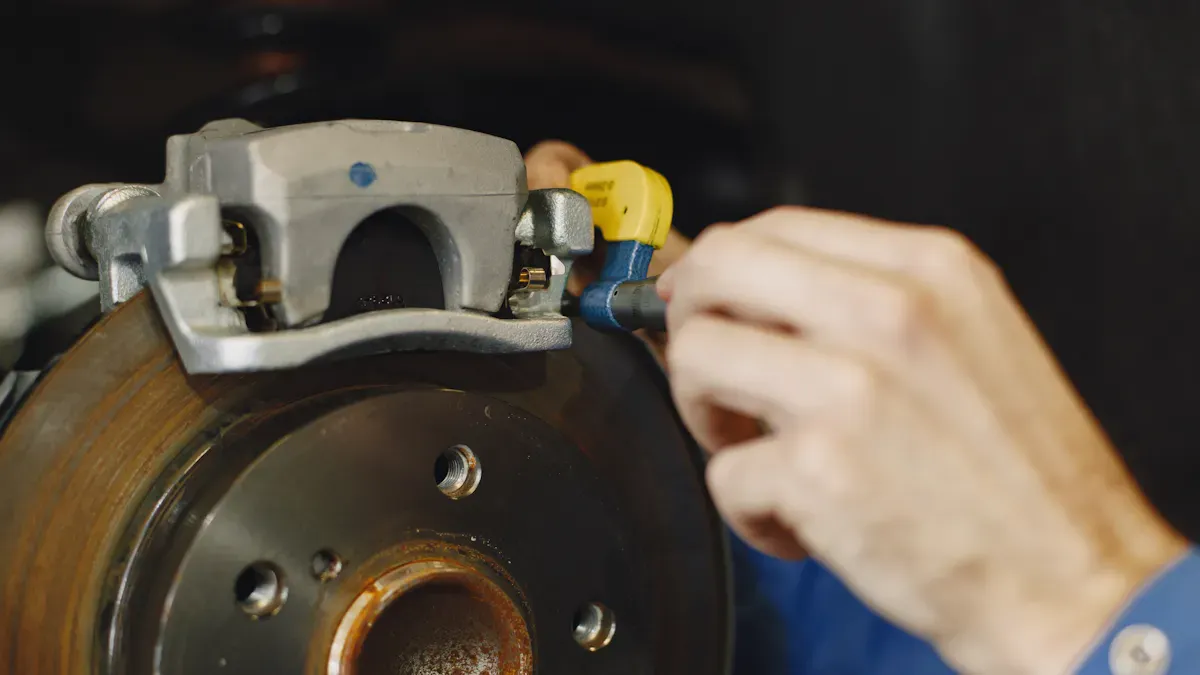
When you press the brake pedal, you start a chain reaction inside your car. The braking system uses brake fluid to move your foot’s force to the wheels. This process happens quickly and smoothly, giving you control every time you need to stop.
You press the brake pedal with your foot.
Pistons in the master cylinder push against the brake fluid.
The fluid builds up pressure and moves through the brake lines.
This pressure travels to the brake calipers at each wheel.
The calipers squeeze the brake pads against the rotors, creating friction.
Friction slows down the wheels and brings your car to a stop.
Brake fluid does not compress, so all the force you apply goes straight to the brakes. This direct transfer makes braking feel firm and responsive. In electric vehicles, the process can look a bit different. The electric motor helps slow the car by acting as a generator. It recovers energy and charges the battery. The braking force splits between energy recovery and stopping the vehicle. Even then, brake fluid still plays a key role in the hydraulic system, especially when you need strong stopping power.
You depend on brake fluid every time you drive. Without enough brake fluid, the hydraulic system cannot work. Your car would lose braking power, and you could not stop safely. Contaminated or old brake fluid can also cause problems.
Reduced braking performance means your car takes longer to stop. This can be dangerous in emergencies.
Low brake fluid can lead to complete brake failure. You might not be able to stop at all.
Moisture in the fluid can cause rust and weaken metal parts inside the braking system.
Contaminated brake fluid can make the pedal feel spongy and slow down your response time.
Brake fade may happen, making it hard for the system to create enough friction.
Brake failure puts you and others at risk on the road.
Modern brake fluid technology keeps up with new types of vehicles. Electric cars often need brake fluid with higher boiling points. These cars are heavier and can heat up the brakes faster. The fluid must also resist corrosion and have low electrical conductivity to avoid problems with the car’s electronics. Lower viscosity helps the fluid move quickly, so you get fast braking response.
Note: Always check your brake fluid level and quality. Clean, fresh brake fluid keeps your braking system working at its best. If you notice a soft pedal or longer stopping distances, you may need to replace the fluid.
Brake fluid connects your foot to the brakes. It gives you the stopping power you need to drive safely. By understanding how it works, you can keep your car’s braking system in top shape.
Types of Brake FluidMost cars use four main brake fluid types: DOT 3, DOT 4, DOT 5, and DOT 5.1. Each type has different chemicals and works in its own way. The table below shows how they are different:
|
Brake Fluid Type |
Composition |
Hygroscopic |
Compatibility with Glycol Fluids |
Performance Characteristics |
|---|---|---|---|---|
|
DOT 3 |
Glycol-based |
Yes |
Compatible |
Standard boiling points |
|
DOT 4 |
Glycol-based |
Yes |
Compatible |
Higher boiling points |
|
DOT 5 |
Silicone-based |
No |
Not compatible |
Often inappropriate for older systems |
|
DOT 5.1 |
Glycol-based |
Yes |
Compatible |
High-performance glycol blend, similar to DOT 4 |
DOT 3, DOT 4, and DOT 5.1 are made with glycol and soak up water. DOT 5 is made with silicone and does not soak up water. This makes DOT 5 stand out from the others.
Boiling point is also important. A higher boiling point helps stop brake fade when you use your brakes a lot. The chart below shows the dry and wet boiling points for each type:
You should pick the brake fluid that fits your car’s needs. Think about these things:
The brake fluid type your car needs
What your car’s braking system needs
How and where you drive your car
What your owner’s manual or mechanic says
Car makers usually say to use DOT 3 or DOT 4 for normal driving. If you drive fast or race, DOT 5.1 might be better. The right fluid helps your brakes last longer and work well. DOT 3 soaks up water faster, so you may need to change it more often. DOT 4 keeps out water better and works well in newer cars. All brake fluids take in water over time, which can lower their boiling point and cause brake fade or a soft pedal. Water can also turn into vapor and even make your brakes fail.
Tip: Always look at your owner’s manual before you add or change brake fluid. Using the wrong fluid can hurt your brakes.
Picking the right brake fluid keeps you safe and your brakes strong.
Brake Fluid Performance and MaintenanceYou need to know what can change brake fluid performance. Humidity plays a big role. In places with high humidity, brake fluid can absorb up to 5% moisture in just two weeks if you do not seal it well. This moisture can cause rust inside the braking system and lower braking efficiency. Cold weather also affects performance. When temperatures drop below -22°F, brake fluid can thicken. Thick fluid cannot move well, so braking becomes slow and unsafe.
Moisture absorption is a main reason for poor performance. As brake fluid ages, it attracts more water. This lowers the boiling point and can cause brake fade during heavy braking. When water builds up, steam can form in the brake lines. Steam makes the system less effective and can lead to dangerous situations.
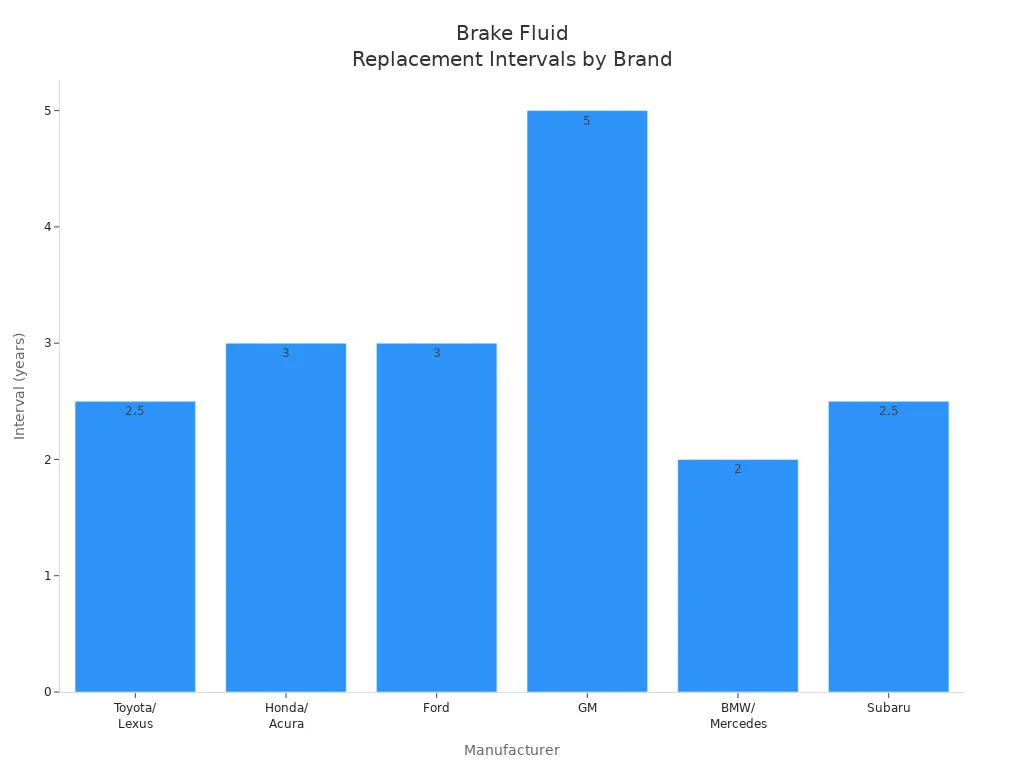
You should replace old brake fluid on a regular schedule. Most car makers suggest changing it every 2 to 3 years. Some brands, like GM, recommend up to 5 years, but many experts say 3 years is best. Check your owner’s manual for the right interval.
|
Manufacturer |
Recommended Interval |
Notes |
|---|---|---|
|
Toyota/Lexus |
Every 2-3 years |
Check the owner’s manual |
|
Honda/Acura |
Every 3 years |
Severe service: 2 years |
|
Ford |
Every 3 years |
Or 36,000 miles |
|
GM |
Every 5 years |
Many recommend 3 years |
|
BMW/Mercedes |
Every 2 years |
European specs more frequent |
|
Subaru |
Every 2-3 years |
Check maintenance schedule |
If you do not replace old brake fluid, moisture can cause rust and lower the boiling point. This can lead to brake fade, a spongy pedal, and even brake failure. Thick fluid can slow down braking and wear out parts faster.
Watch for these signs that you need to change or replace brake fluid:
Brake warning light or ABS light on the dashboard
Soft or spongy brake pedal
Longer stopping distances
Discolored, dark, or dirty brake fluid
Unusual noises when braking
Reduced braking performance
Brake pads wearing unevenly
Fresh brake fluid looks clear or light yellow. If you see dark brown or black fluid, it means you need to replace it soon.
You can check brake fluid at home. Follow these steps:
Park your car on a level surface.
Open the hood.
Find the brake fluid reservoir.
Check the fluid level against the "MIN" and "MAX" marks.
Look at the color and consistency.
Top up with the right type if needed.
Close the hood.
You may use tools like a motive power bleeder or speed bleeders for easy topping up. Always keep the system clean to protect braking performance.
Regular maintenance of brake fluid keeps your braking system safe and strong. It prevents rust, corrosion, and keeps braking smooth every time you drive.
You need brake fluid to stop your car safely. New brake fluid in 2026 lasts longer and works better in heat. It is good for modern cars. Checking brake fluid often helps you avoid expensive fixes. It keeps your brakes working well. Here are steps to take care of your brake fluid:
Change brake fluid every two years.
Flush the system to get rid of water.
Check fluid when you do regular maintenance.
Picking the right brake fluid helps your brakes work fast. It also keeps your car safe.
FAQYou risk damaging your car’s braking system. The seals may swell or leak. Your brakes might not work well. Always check your owner’s manual before adding or changing brake fluid.
You may see a warning light on your dashboard. The brake pedal can feel soft or spongy. You should check the fluid level in the reservoir. Low fluid can mean a leak in the brake lines.
You should never mix DOT 5 with DOT 3 or DOT 4. Mixing can cause poor braking and damage parts. Always use the type your car needs.
Brake fluid absorbs moisture over time. Water lowers its boiling point. This can cause brake fade or failure. Fresh fluid keeps your brakes working safely.
Please leave your requirements and contact information, and we will send you the quotation information as soon as possible.