Date: 2026.05.08 Click: 8
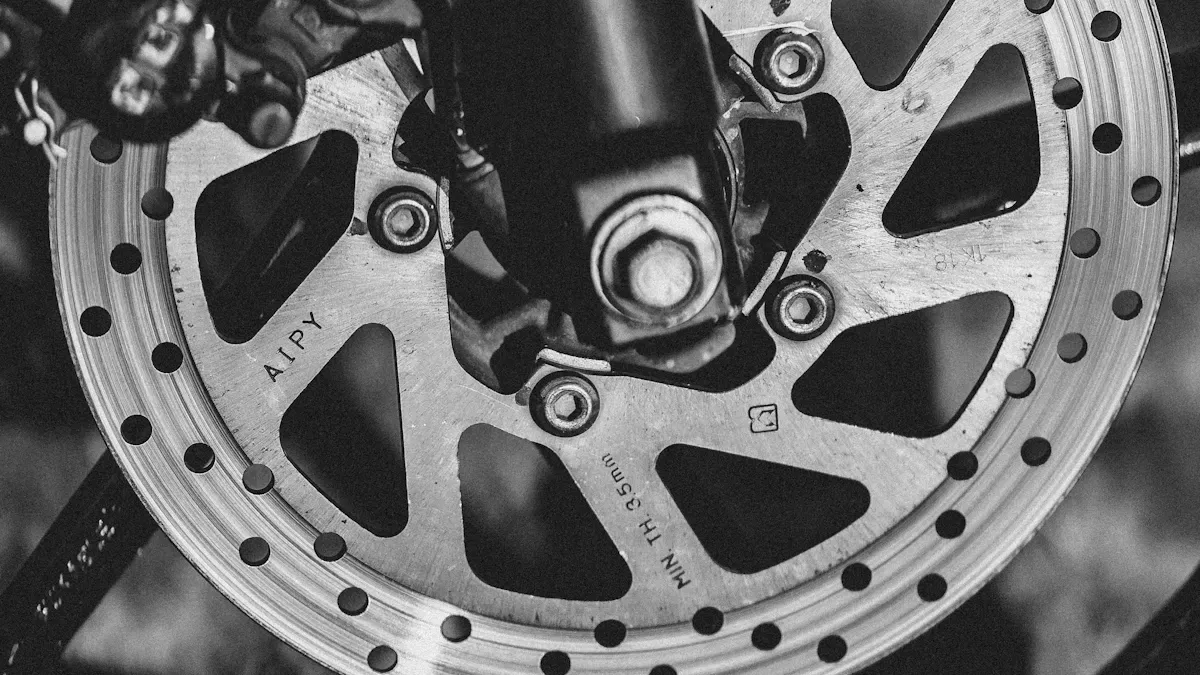
You can find the brake disc in your car’s braking system. When you press the brake pedal, hydraulic pressure moves the brake pads to the disc. This makes friction and slows your car down. Brake discs help keep you safe on the road. Many accidents happen because brakes fail or are not cared for. The table below shows why checking your brakes often is important for safety.
|
Evidence Type |
Description |
|---|---|
|
Brake Failure Statistics |
Brake failure causes many accidents around the world. This shows why taking care of brakes is important. |
|
Driver Distraction |
30% of drivers get distracted while driving. If brakes are not cared for, this makes accidents more likely. |
|
Case Studies |
Many accidents could be stopped with good brake checks and repairs. This shows why maintenance matters. |
Brake discs help your car stop safely. They make friction when brake pads push on them. This slows down the wheels.
Check your brake system often. Look at brake discs and pads every 12,000 miles or once a year. This keeps you safe and your car working well.
Brake discs are made from different materials, like cast iron and steel. Each material has good and bad points. These affect how well they work and how long they last.
How you drive changes how fast brakes wear out. City driving wears out brakes faster because you stop a lot. Highway driving is easier on brakes.
Learn about new brake technology. New designs and materials can make brakes safer and work better. This makes driving safer and more fun.
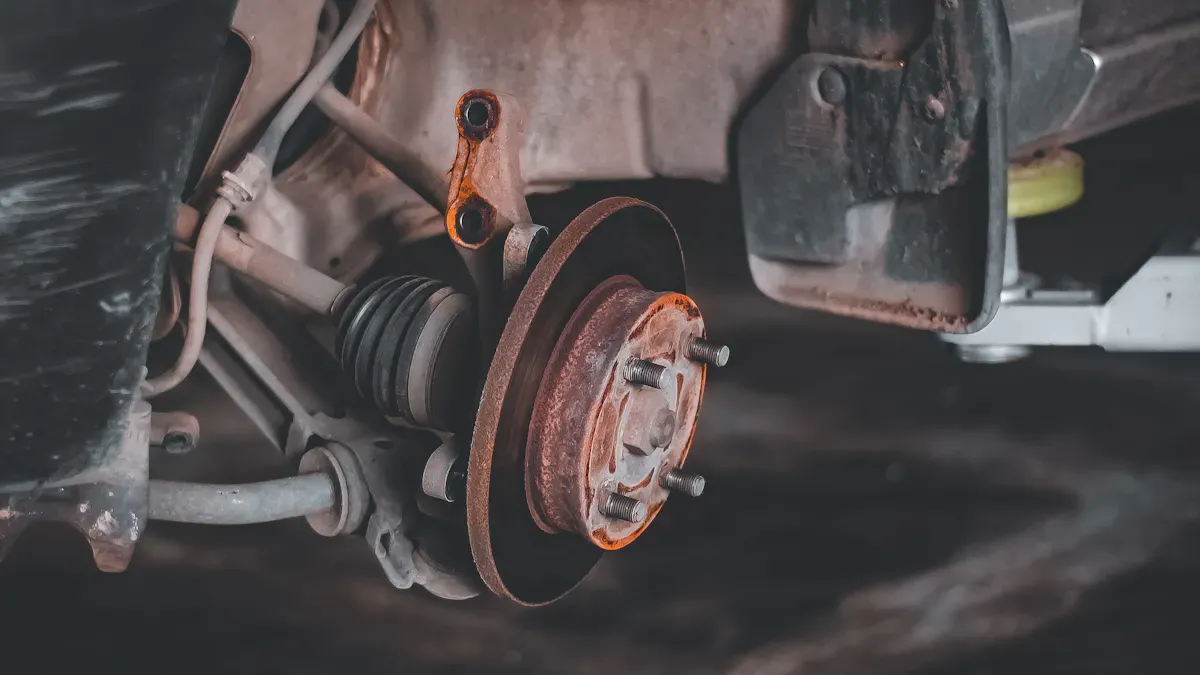
When you press the brake pedal in your car, you start a process that helps you slow down or stop. The disc brake system uses hydraulic pressure to make this happen. The force from your foot pushes on the brake pedal. This force moves hydraulic fluid through the braking system. The master cylinder changes your push into hydraulic pressure. This pressure travels to the brake calipers. The calipers then push the brake pads against the spinning brake disc.
The friction between the brake pads and the disc creates heat. This friction is what slows down the wheel and helps your car stop safely.
You can see the main steps of the disc brake system below:
You press the brake pedal to begin braking.
The master cylinder turns your force into hydraulic pressure.
Hydraulic pressure moves the brake pads against the brake disc.
Friction between the pads and disc slows the wheel, causing the car to decelerate.
This process happens quickly every time you use the brakes. The disc brake system gives you strong and reliable stopping power.
The disc brake system has several important parts. Each part has a special job in the braking system. Here is a table that shows the main components and their functions:
|
Component |
Function |
|---|---|
|
Brake discs |
Connected to the wheel hub, they dissipate heat and provide stability and deceleration performance. |
|
Pressed against the brake disc to create friction, converting kinetic energy into heat for braking. |
|
|
Brake caliper |
Presses the brake pads against the disc, converting hydraulic pressure into braking force. |
You will find these parts working together in most modern cars. The calipers hold the brake pads and push them against the rotor. The brake pads slow down when pressed against the spinning disc. The rotor, or brake disc, spins with the wheel and gets clamped by the pads to slow the car.
The disc brake system is a key part of your car’s braking system. It helps you stay safe by giving you control when you need to stop.
Brake DiscYou can spot the brake disc through the wheel of most cars. It is also called a rotor. The brake disc stays attached to each wheel. When you press the brake pedal, the brake pads squeeze the disc. This makes friction. Friction slows the wheel and helps your car stop. The brake disc gives you strong stopping power every time you brake. You count on this part to drive safely. The disc must handle lots of pressure and heat when braking. Most brake discs use tough materials to survive these hard conditions.
Car makers use different materials for brake discs. Cast iron is the most common material. Cast iron lasts a long time and handles heat well. Some brake discs use steel for extra strength. Others use composite materials to make the disc lighter and help it cool better. Each material has good and bad points.
|
Material |
Advantages |
Disadvantages |
|---|---|---|
|
Cast Iron |
Lasts long, handles heat well |
Heavy, can rust |
|
Steel |
Very strong, resists bending |
Heavier than other materials |
|
Composite Materials |
Light, cools well |
Costs more, may wear out faster |
The way brake discs are made changes how they work. Some discs are solid. Others have channels or grooves. Ventilated brake discs cool faster because air moves through the channels. This keeps them from getting too hot and helps them work well. Ventilated discs are usually on the front wheels, where most stopping power is needed. Solid discs are good for lighter cars or rear wheels.
|
Feature |
Solid Brake Discs |
Ventilated Brake Discs |
|---|---|---|
|
Design |
Solid, no holes |
Two rings with air channels |
|
Heat Dissipation |
Not as good, can get too hot |
Better, air flows through |
|
Braking Efficiency |
Good for light cars |
Stays strong under heavy use |
|
Typical Use |
Rear wheels or light cars |
Front wheels in most cars |
New designs keep making brake discs better. Some discs have a wave shape to add more surface area. This shape pulls in cooler air and helps the disc cool down. Electric and hybrid cars use special coatings to stop rust. These coatings last longer because these cars use brakes less.
Car makers also think about the environment. Some use recycled materials for brake discs. Others make new materials that last longer and pollute less. Lighter discs help cars use less gas and make fewer emissions.
|
Sustainable Practice |
Environmental Benefit |
|---|---|
|
Use of Recycled Materials |
Lowers environmental impact |
|
Innovations in Sustainable Materials |
Uses materials that are better for the planet |
|
Extended Product Lifespan |
Fewer replacements, saves resources, less waste |
|
Carbon Emission Reduction |
Lighter discs help cars use less fuel |
|
Consumer Awareness |
Teaches people about eco-friendly choices |
When you press the brake pedal, your car slows or stops. The brake disc helps by turning moving energy into heat. Here is how it works:
The brake pads push against the spinning brake disc.
This makes friction.
Friction turns the car’s moving energy into heat.
The heat goes into the air, and your car slows down.
Friction between the brake pads and disc is why your car stops. The brake disc must handle lots of heat every time you brake. If the disc gets too hot, it may not work as well. That is why good design and strong materials are important.
How you drive changes how fast brake discs wear out. City driving wears them out faster because you stop a lot. Highway driving wears them out less because you brake less. Aggressive driving wears out brake discs quickly, no matter where you drive.
|
Driving Condition |
Effect on Brake Disc Wear |
|---|---|
|
City Driving |
Wears out faster because of lots of stopping |
|
Highway Driving |
Less braking, so less wear |
|
Aggressive Driving |
Hard braking makes discs wear out quickly |
Brake discs are very important for stopping your car. They help keep you safe every time you drive.
Brake Caliper and Pads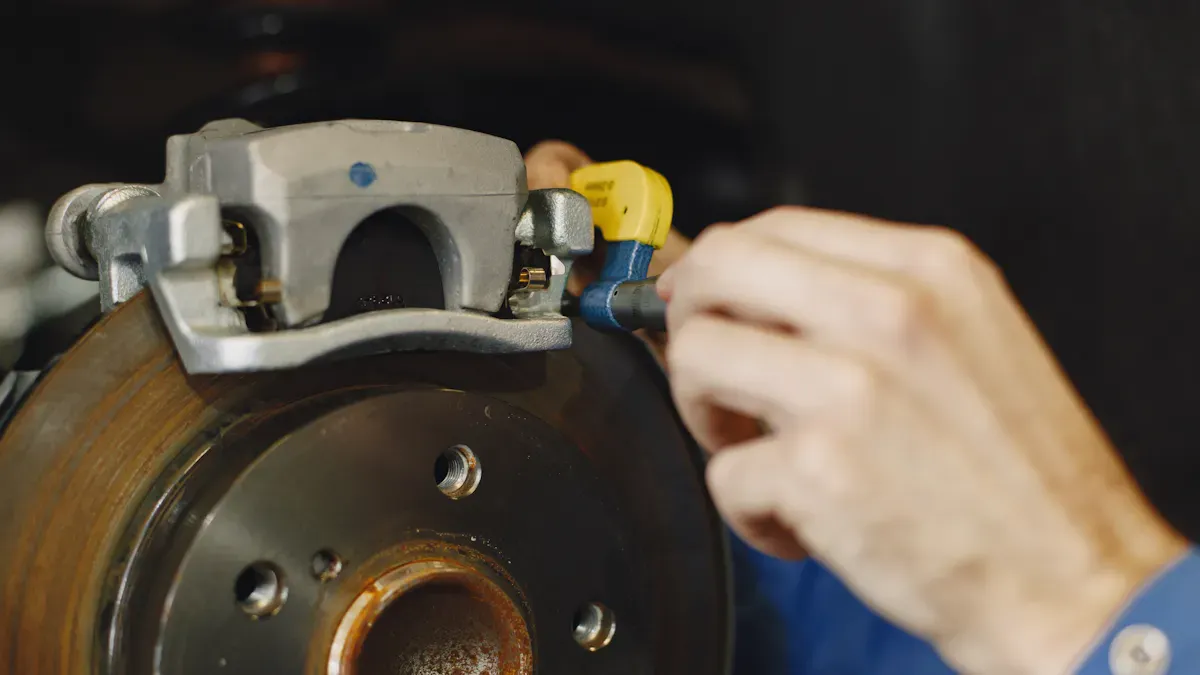
When you press the brake pedal, the brake caliper starts working. The caliper uses hydraulic or pneumatic pressure to move pistons inside its body. These pistons push the brake pads against the spinning brake disc. You will find two main types of calipers in cars:
Fixed calipers have pistons on both sides of the disc. They apply even pressure from both sides.
Floating calipers have pistons on one side. The caliper slides to pull the other pad in, so both pads clamp the disc.
The table below shows how different caliper types work:
|
Type of Caliper |
Operation Description |
Advantages |
Disadvantages |
|---|---|---|---|
|
Non-Rotating (Type 1) |
Piston retracts by pushing back into the bore without rotation. |
Simple retraction process. |
No special disadvantages. |
|
Screw-Type (Type 2) |
Piston must be screwed back for retraction. |
Works as a parking brake, no extra parts needed. |
Needs a special tool; possible o-ring wear. |
A well-sized brake caliper can create between 2,000 to 4,000 N·m of braking torque per wheel. This strong force helps your car stop quickly and safely.
Brake pads play a key role in stopping your car. The friction material on the pads touches the brake disc and creates the force needed to slow down. The table below explains the parts of brake pads and their impact:
|
Material Type |
Impact on Performance |
|---|---|
|
Friction Material |
Controls how well the pads grip, how they handle heat, and how fast they wear. |
|
Adhesive Layer |
Bonds the friction material to the backing plate, must handle high heat and pressure. |
|
Backing Plate |
Gives strength and keeps the pad stable under heat, usually made from strong steel. |
High-quality brake pads keep their grip even when hot or under stress. Poor pads wear out fast and can cause noise or uneven braking. Good pads help your brake system work smoothly every time.
When you press the brake pedal, the brake caliper squeezes the brake pads against the brake disc. The friction material on the pads meets the disc and creates the friction needed to stop your car. The adhesive layer holds the friction material to the backing plate, even under high heat and pressure. This teamwork between the brake caliper and brake pads gives you safe and reliable braking every time you drive.
Tip: Check your brake pads often. Worn pads can lower your braking power and make driving unsafe.
You help keep your car safe by learning about brakes. If you know how disc brakes work, you can find problems early. This helps you avoid accidents. Checking brake fluid often keeps the hydraulic system strong. It also makes your brakes work well. Some drivers think all brake pads are the same. Others believe brakes do not need checks if they feel okay. Some people think high-performance pads are always better. That is not true for normal driving. New brake technology, like carbon composite discs and smart systems, makes cars safer. It also makes them easier to control. Keep learning and take care of your brakes. This helps you drive safely.
FAQYou rely on the brake disc to help your car stop. The disc creates friction when the brake pads press against it. This friction slows the wheel and gives you strong stopping power during brake application.
You should check your brake discs every 12,000 miles or once a year. Regular inspections help you spot wear or damage early. This keeps your braking system safe and reliable.
Brake pads touch the brake disc directly during braking. They absorb most of the friction and heat. You will notice that pads wear out faster because they handle more stress in the disc brake system.
You should not drive with a damaged brake caliper. The caliper controls how the brake pads press against the disc. If it fails, your braking system loses stopping power and puts you at risk.
If your brake discs overheat, you lose stopping power. The disc can warp or crack. You may feel vibrations during brake application. Overheating weakens the disc brake system and makes driving unsafe.
Please leave your requirements and contact information, and we will send you the quotation information as soon as possible.